

1988
DIGITAL PHOTOGRAPHY - 1988.
In a 1988 article, Jim Pomeroy defined digital photography: "Digital
Photography" can be defined as the electronic recording of visual
information such that it can be recalled, viewed, processed,
transmitted, and reproduced by means of computer memory and
storage. He also said, "Digital photography will not
replace 'chemical' photography anymore than photography replaced
painting -- but painting, and the rest of the world, did change profoundly
with photography's widespread inception."
In an article by
Al Fasoldt in 1989, he remarked, "...problems aren't holding back the
development of the new system (electronic photography), which many
experts believe will take over completely from film cameras by the
middle of the next century (2050)."
Seems folks weren't too optimistic about the future of electronic photography in those days!
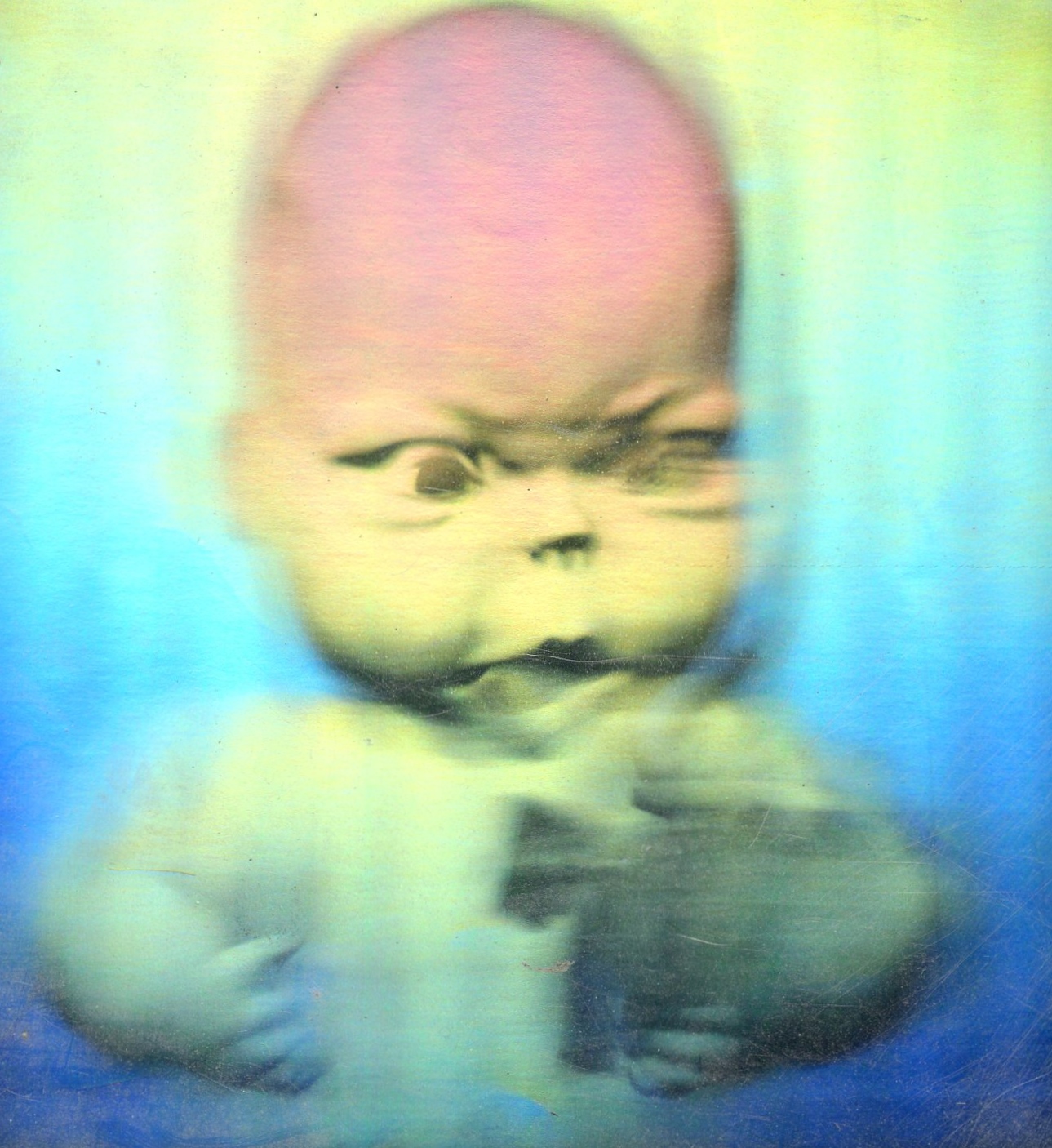
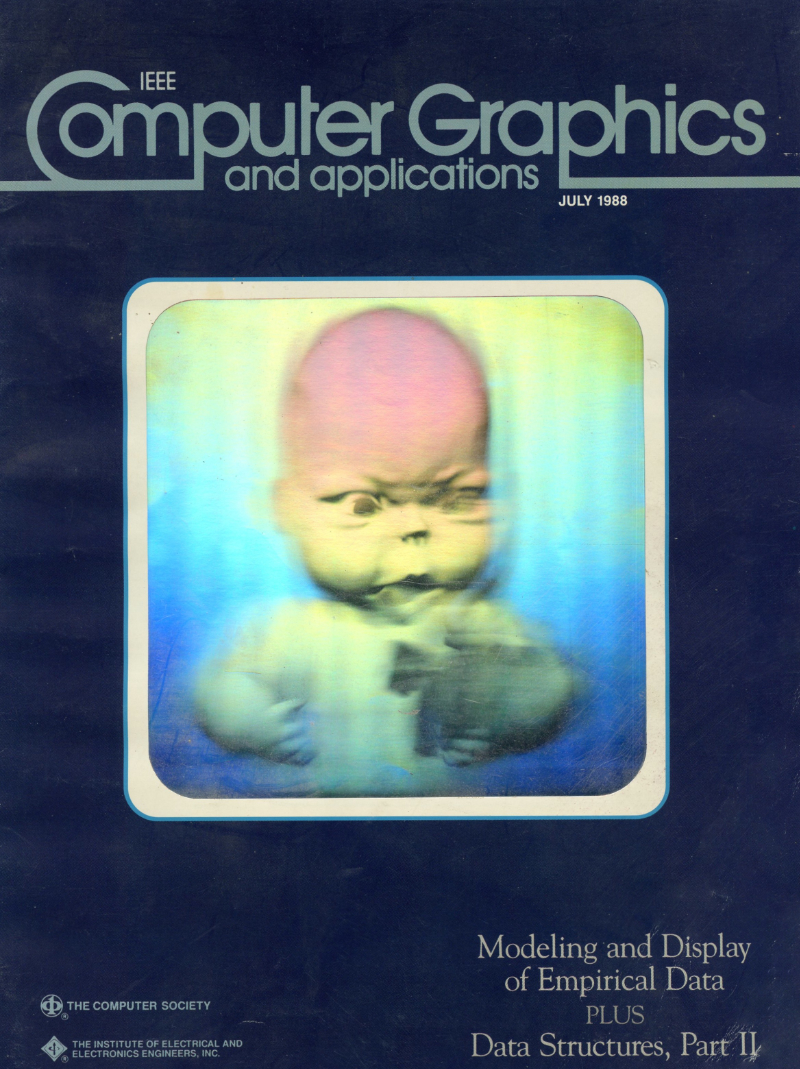
FIRST ANIMATED HOLOGRAM MAGAZINE COVER -1988.
The July 1988 issue of Computer Graphics and Applications was published
with an animated hologram, when the cover was tilted left to
right the baby opened and closed his mouth. The cover was
designed by Jay Simpson and the image was created by John Lasseter of
Pixar using 150 separate frames at 1024 x 1024 pixels. American
Signature Graphics and ABN Holographics were responsible for actual
production of the cover. Computer Graphics and
Applications,
July 1988, pages 4-6. Magazine donated to DigiCamHistory.Com by
Norman Breslow.
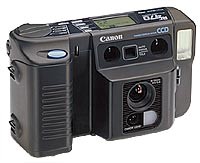
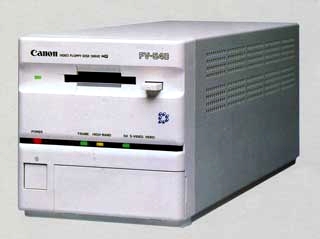
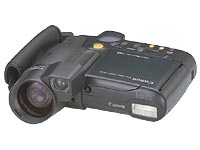
CANON RC-470 - 1988. The
Canon still video RC-470 had 400-line quality (1/2-inch, 360,000 pixel CCD). The RC-470
was part of the Canon Professional Still Video Imaging Kit that listed at $4,899
and included the FV-540 (on right), a SCSI-based 2-inch video floppy drive, and SV Scan
image editing software. The drive and software would display thumbnails
of all photos. (Rare on U.S. eBay)
http://global.canon/en/c-museum/history/story07.html
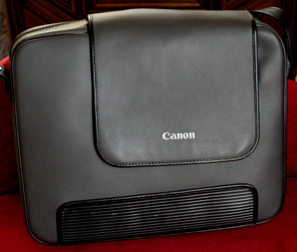
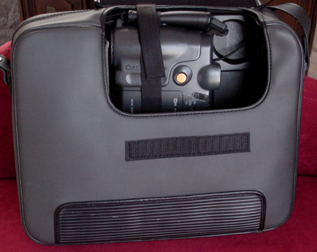
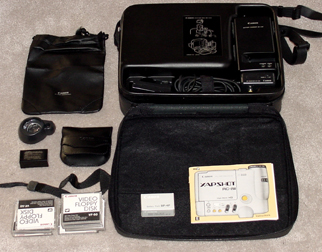
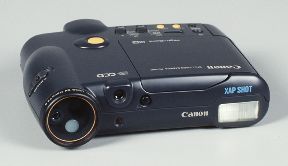
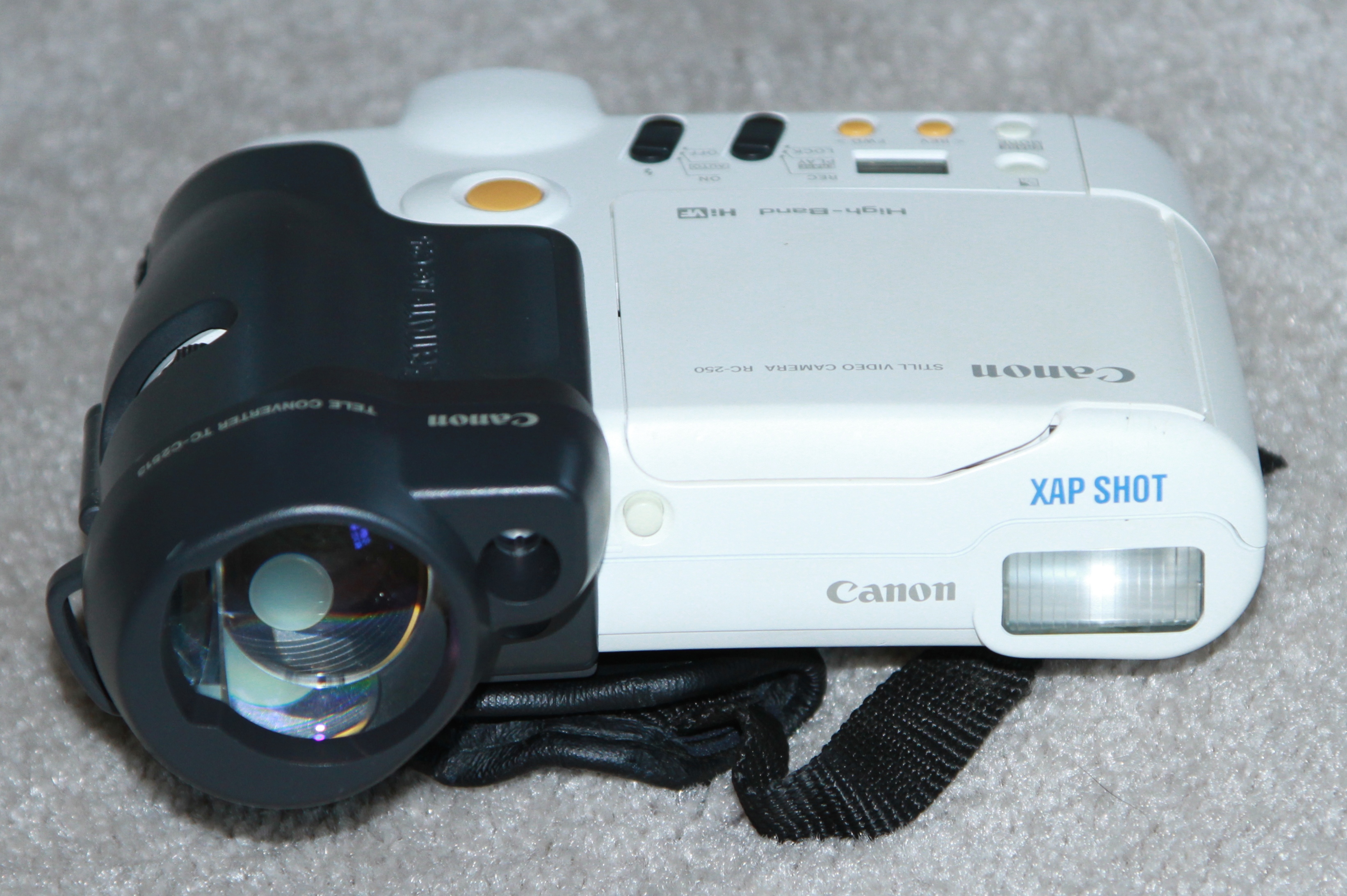
CANON RC-250 XAPSHOT (Ion in Europe, Q-PIC in Japan) - 1988. The XapShot was a Hi-band still video camera with a 1/2-inch 200K pixel CCD. ISO 100. 11mm f/2.8 lens. Shutter 1/30 to 1/500 second. The XapShot had a built-in flash, self-timer, and an unusual rechargeable lead acid battery. MSRP $499. The $499 was just for the camera itself. Also required was a $999 kit which included one floppy disk, the battery, and computer interface card with software. The two-inch floppy disks sold for $10 each. The USA version of the XapShot could send a NTSC signal to a TV/VCR for playback and recording of images. There was also a very basic software utility that worked under System 6/7 for the Mac in conjuction with the Computer Eyes NuBus video capture card that the camera connected to. Later, a Plug-in shipped that worked with Letraset's ColorStudio and then Adobe Photoshop to capture the images. Popular Photography. December 1991. p108. Click on image to see enlarged view of XapShot exterior and cutaway view. (Rare on U.S. eBay)
http://global.canon/en/c-museum/history/story07.html
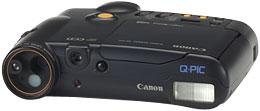
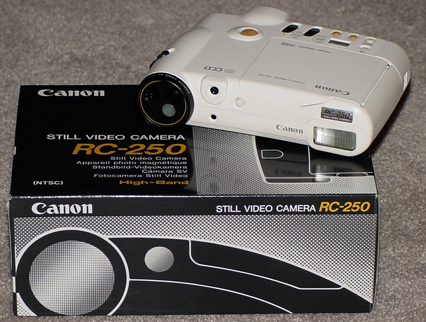
Q-PIC
version of the RC-250 sold in Japan. There was also a white version
that was sold as a Q-PIC or one that had a sticker on the upper
right-hand corner that merely said RC-250 such as the one shown above
in the middle. It also came in black and white when fitted
with the optional Action Grip AG-C25 which had a threaded hole for
tripod mounting that the camera itself did not have. Also, a
Canon telephoto lens could be attached to the Action Grip (photo far
right). (Rare on U.S. eBay)

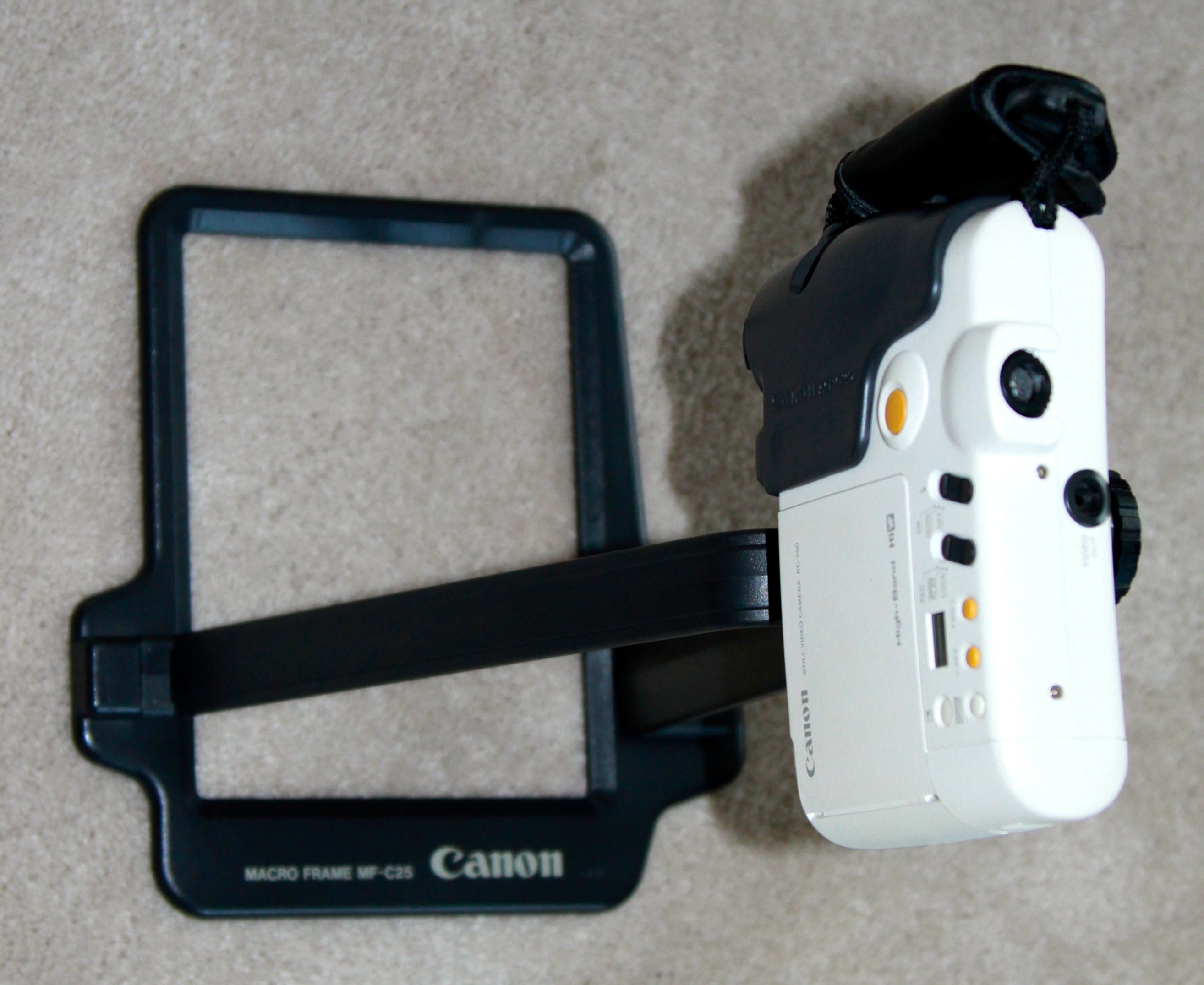
The AS-C25 Action Set
included the Action Grip AG-C25 and the TC-C2513 telephoto lens.
The MF-C25 Macro Frame was an optional item.
CHINON
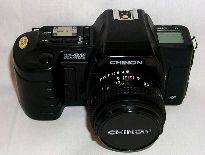
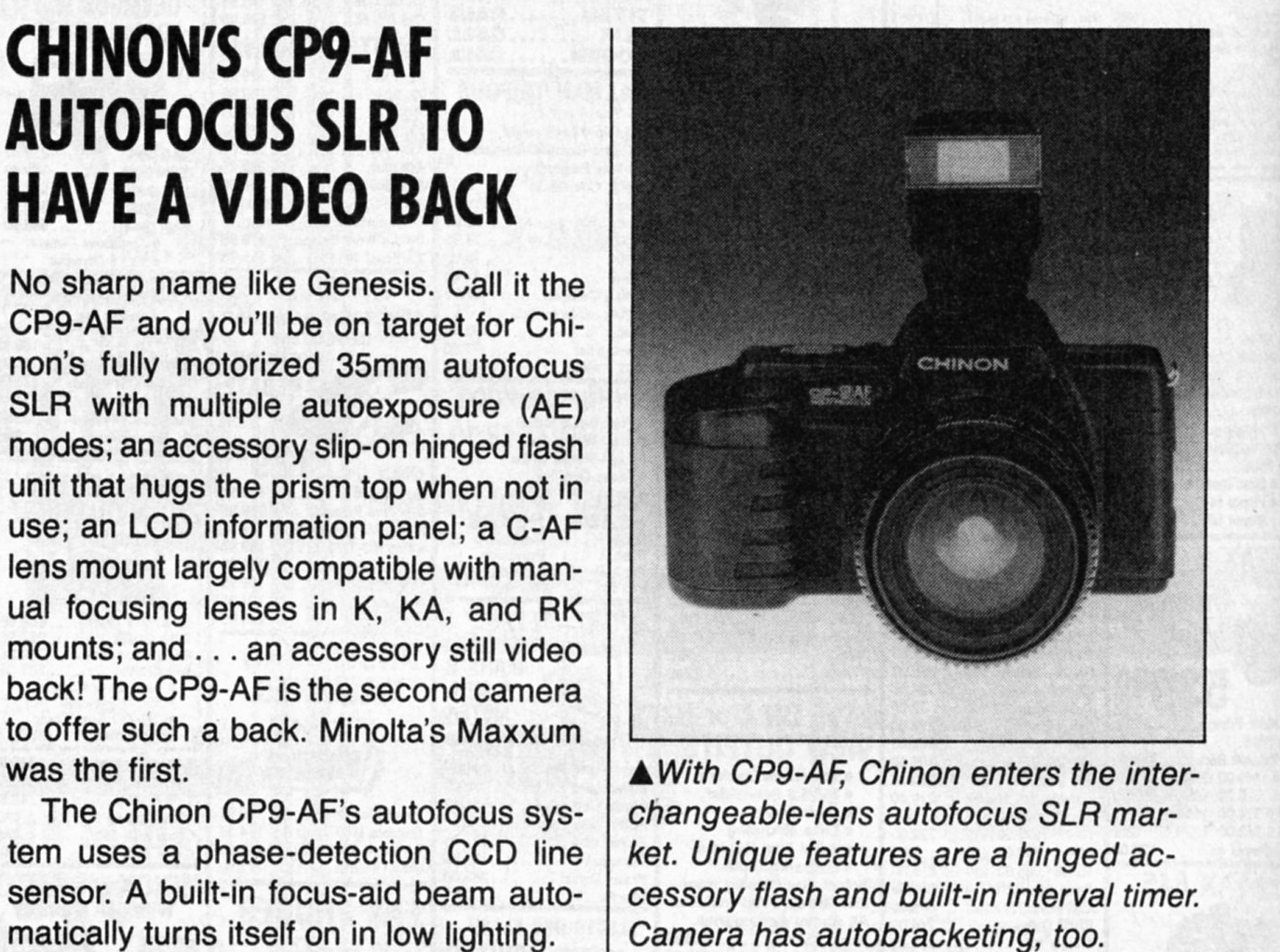
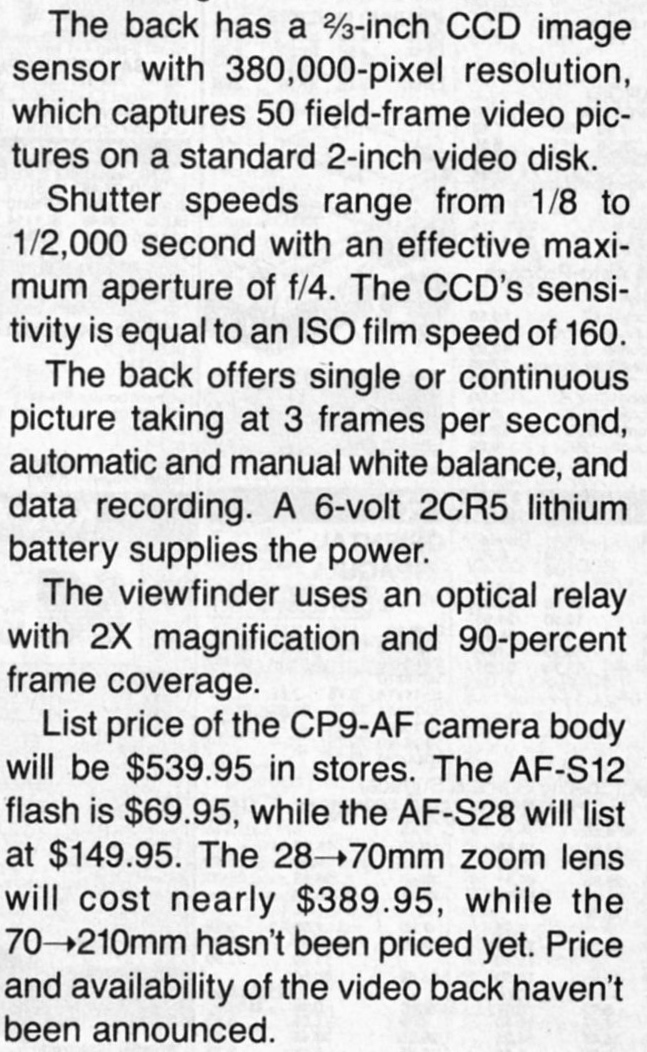
CP9-AF - 1988. Chinon developed an
electronic
still video back for its CP9-AF 35mm SLR camera. 640 x 480 pixel
CCD. ISO 160. Shutter 1/8 to 1/2000 second. 50
field-frame
still video images recorded on a two-inch floppy disk .The
back offered single or continuous picture taking at 3 frames per
second, automatic and manual white balance, and data recording.
However, the digital back apparently never was marketed by Chinon. A
6-volt 2CR5 lithium battery supplied the power. The viewfinder used an
optical relay with 2X magnification and 90-percent frame coverage. MSRP for
the
CP9-AF body: $540. Popular Photography, May 1988,
p90. Click on image to see full-page view. Still Video Back. NOT MARKETED.
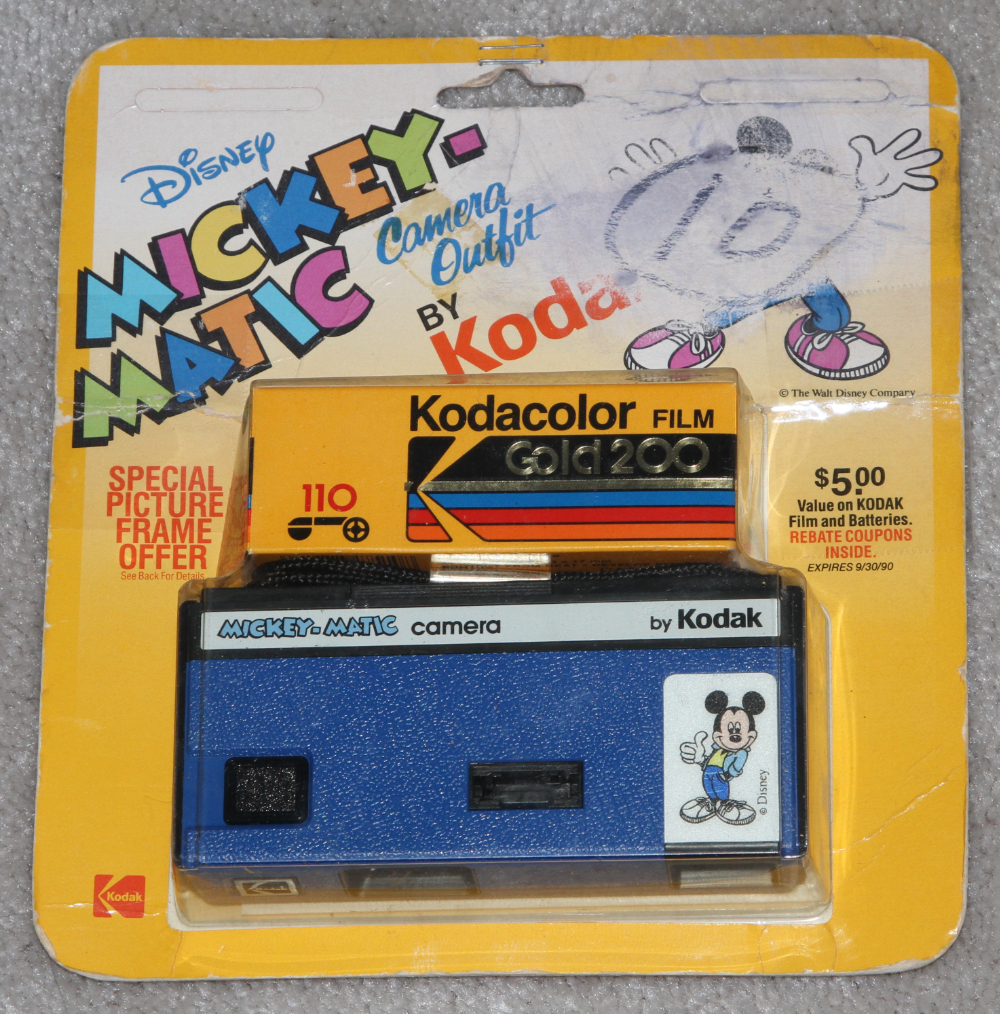
DISNEY MICKEY-MATIC (Model A) - 1988. Manufatured by Kodak and sold under other names, such as the Winner, Gimini, Galactic, Kodak Kids Camera, etc. It came in blue and pink and has a picture of Mickey Mouse on the top. Uses flip-flash and 110 Film. It came with a braded string type wrist strap. The Flip-Flash required no batteries and automatically used the next forward facing flash bulb. The shutter speed is 1/90 of a second with or without a Flip-Flash plugged in. The lens is a 25mm fixed focus f/11 and has a focus range of 5ft to infinity. Sold in a blister pack containing a roll of Kodacolor 110 ISO 200 film, wrist strap, instructions, and a mail-in coupon for a limited edition Mickey Mouse ceramic frame for the price of $4.49. Apparently sold in great numbers as there always many for sale on eBay. Camera MSRP $12.99.
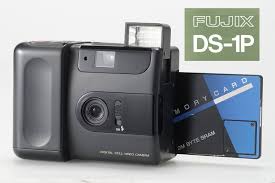
FUJIX SRAM Image Memory Card - 1988.
SRAM (Static Random Access Memory) cards are used for temporarily
backing up parameters, programs, data and drive data. The Fujix
SRAM card, which was developed with Toshiba, held two megabytes of
SRAM, and could hold between 5 and 10 photographs. It was used in
the Fujix DS-1P of 1988 (see below), the world's first fully digital consumer
camera and the first to record digital images on removable flash card
media.
http://camera-wiki.org/wiki/Fujix_DS-1P
https://petapixel.com/2016/06/09/photo-history-worlds-first-fully-digital-camera-invented-fuji/
https://www.digitalkameramuseum.de/en/memorycards
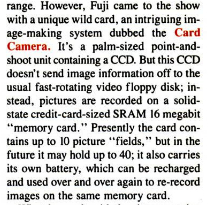
FUJI CARD CAMERA - PHOTOKINA 1988. A preproduction version of the Fuji DS-1P was shown at the 1988 Photokina in Colone, West germany, as the Card Camera. It had a 400 kilopixel CCD and saved up to ten images on a removable 16MB Toshiba SRAM card. Popular Photography, December 1988, page 94 and 95. We believe NOT MARKETED.
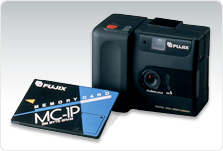
FUJI DS-1P - 1988. The DS-1P was the world's first fully digital consumer camera and the first to record digital images on removable flash card media. It recorded images digitally on SRAM memory cards (SRAM - Static Random Access Memory), with built-in battery for maintaining the memory rather than on a floppy disk as used by still video cameras of that time. The card was developed jointly with Toshiba. 400K CCD. Fixed-focus 16mm f/5.6 (f/4 with flash) lens. Shutter 1/60 to 1/2000 second. Although Fuji demonstrated the DS-1P, there is no record of Fuji having marketed the camera. NOT MARKETED.
The DS-X of 1989 was their first
known marketing of a digital camera. Understanding Electronic
Photography,
John J. Larish, 1990, p44.
Md.jpg)
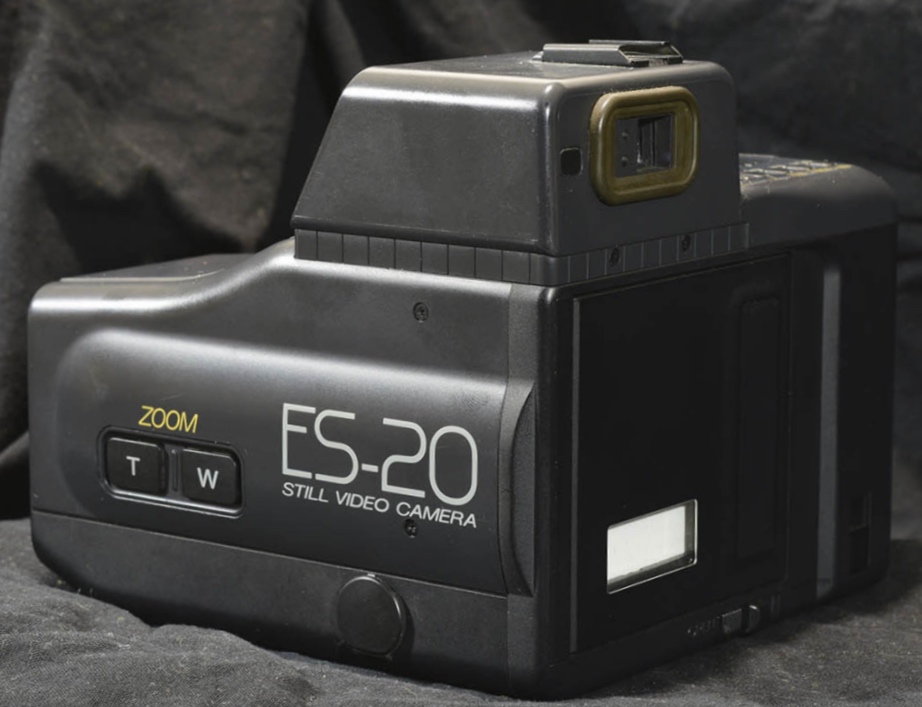
FUJI
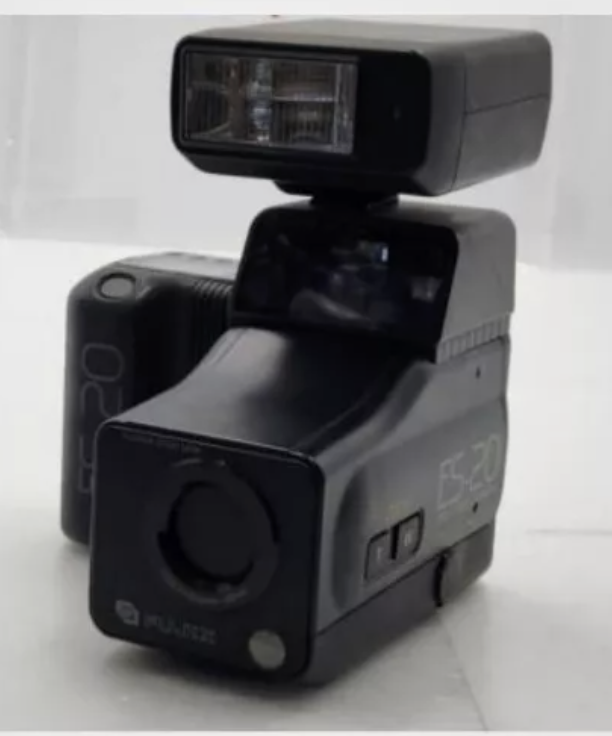
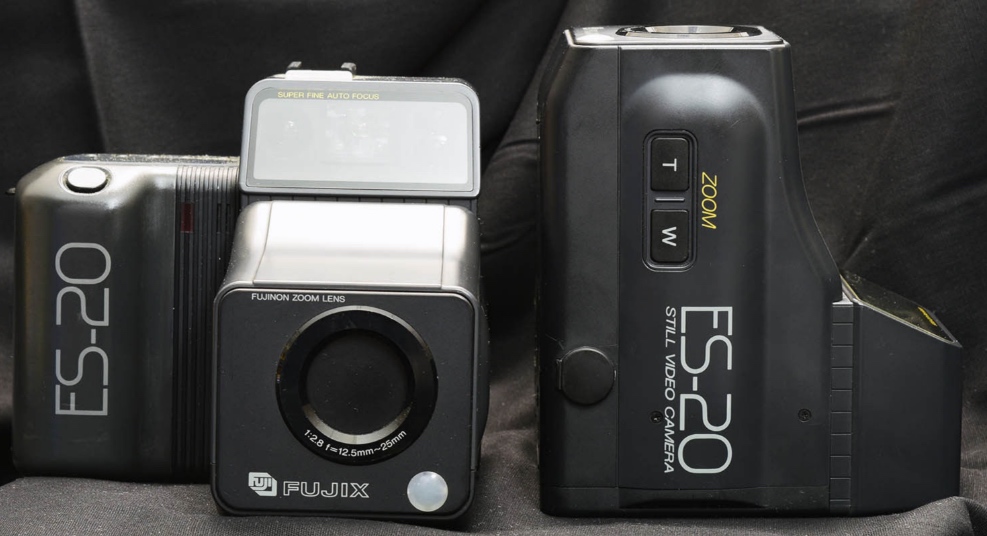
ES-20 - 1988. Still
video
camera.
2/3-inch 400K pixel CCD. ISO 80 to ISO 320. 12.5mm to 25mm
f/2.8 zoom lens. Shutter 1/2 to 1/1000 second. Autofocus
and
built-in flash. Audio. The photo above of a complete kit was
kindly provided by a viewer in China. MSRP $1,125 without
optional flash. Understanding Electronic
Photography,
John J. Larish, 1990, p.35.
http://camera-wiki.org/wiki/Fujifilm_digital_cameras
https://www.digitalkameramuseum.de/en/esvc/item/fujix
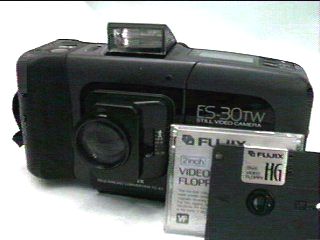
FUJI
ES-30TW - 1988. Still
video
camera. On sale December 1989. 1/2-inch 400K CCD. ISO 100 to 400. 7mm f/3.4 and 14mm
f/4 lenses. Auto focus and built-in flash. Shutter 1/2
to 1/500 second. As with other still video cameras of the time,
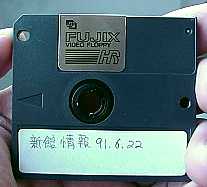
the ES-30TW recorded images on mini floppy disks (see photo on the
left). $720 in Japan. Popular Photography.
December 1991. p108.
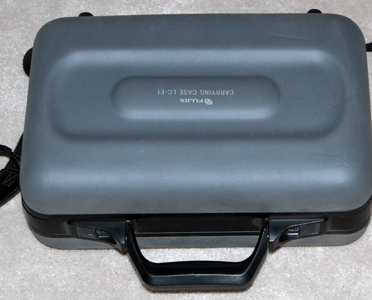
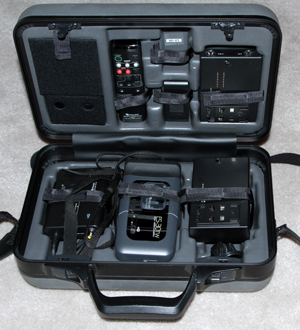
The above camera set
was graciously donated by Gary Barr. Although Gary is not a collector,
he has a collector's appreciation for early electronic camera
technology and has kept his ES-30TW in like-new condition. Unlike many
others who discard such items when they become obsolete or
nonoperational, Gary searched for a new home for his camera where it
would be greatly appreciated and given lots of TLC. Remember, that
latest piece of technology you have recently purchased will someday
become obsolete as do all such products. You can do future generations
a favor by keeping in original condition with the box, manual, and all
other
items that came with you purchase because, sooner than you think, it
will become a historical item of interest. If you do, you may someday
see your high tech gadget in a museum where your children and
grandchildren can enjoy it as you once did. The ES-30TW was sold
only in Japan so it is unlikely that it would be found on any eBay site
other than Japan. Nor can it be found on the Fujifilm web
site, even as a discontinued model. (Extremely Rare on U.S. eBay)
http://camera-wiki.org/wiki/Fujifilm_digital_cameras
https://www.digitalkameramuseum.de/en/esvc/item/fujix-es-30tw
h=0ahUKEwikiLbj9fPYAhXH7VMKHabjCg8Q6AEIRDAG#v=onepage&q=FUJI%20%2B%20%22ES-30TW%22&f=false
https://www.dpreview.com/forums/thread/2144695
http://happycloversw.blog129.fc2.com/blog-entry-105.html?sp&photo=true

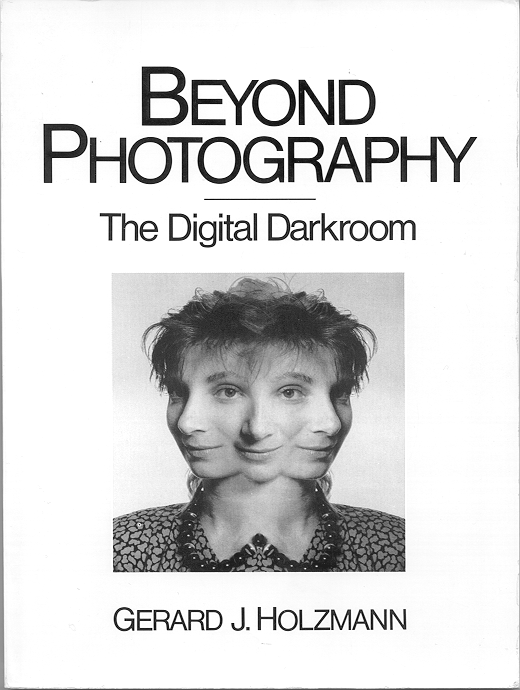
GERARD J. HOLZMANN / THE DIGITAL DARKROOM - 1988.
In 1988, Holzmann published the book, Beyond Photography, where he
coined the term 'digital darkroom.' In his book Holzmann
demonstrated how photographs could be scanned into a computer and
manipulated in a 'digital darkroom' at a resolution that was close to
the resolution of commonly used films and photographic papers at that
time. This was done by an early digital image editing system that
was developed at Bell Labs in 1984. Digital cameras did not exist
at that time, but digital scanners of good quality were readily
available. Once a photo was digitized and in a computer, the
mathematics for how the pixels were to be displayed could be altered
with a variety of formulas that resulted in digitized photos that were
significantly different from the originals and which could be repeated
from one photograph to another. Many of the resulting distortions
of the original photograph were merely humorous, but some did have
practical or artistic purposes. In 1991 Norman Breslow published
his book, Basic Digital Photography, which described how true colored
works of art could be produced by using a TARGA-16 digital photography
graphics board (see 1991 year page).
In addition to developing the math
for the digital manipulation of photographs, Holzmann made this very
prophetic statement on page eight of his book, " It's not unlikely that
within the next ten years the conventional camera we all use today will
be replaced by a digital camera that takes photos on a floppy disk that
is 'processed' in a normal personal computer with the type of soft ware
presented in this book."
http://spinroot.com/pico/index.html
.jpg)
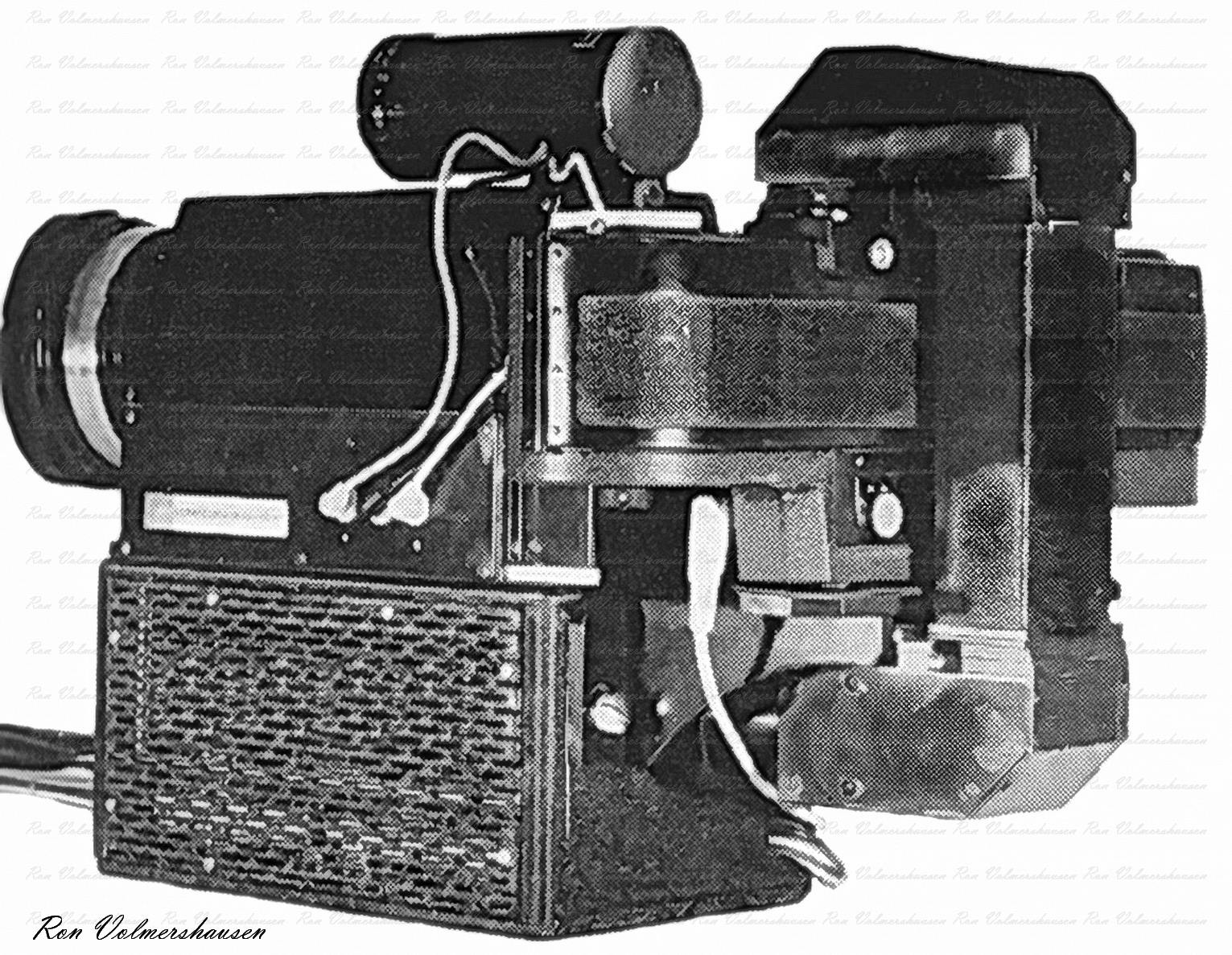
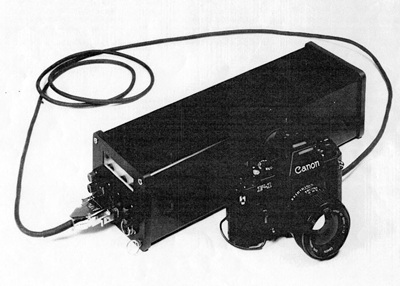
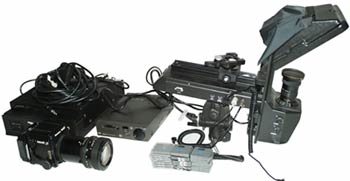
NIKON TV REMOTE FINDER SYSTEM - 1988. See
Nikon Video Remote Control, 1962. Nikon adapted one of their new
1988 F4 35 mm film cameras as a device which allowed viewing of the
image on a TV screen rather than the original camera viewfinder.
The viewfinder had an internal CCD which could then operate as an
analog still video camera. Photos by Ron Volmershausen (photo on
right is same as appears on the Nikon history site below).
http://imaging.nikon.com/history/chronicle/history-f/

JPEG and MPEG - 1988. The Joint Photographic Experts Group selects method for image compression - DCT, Discrete Cosine Transform. JPEG is a lossy compression file format that may or may not cause visible degradation in an image depending on the amount of compression selected. JPEG was developed so that it would be practical to transmit images electronically over the Internet. MPEG was adopted for video-type (moving) images. In 1994/5 ISO Standard ISO 10918 was published as a multi-part international standard that collectively defines JPEG. (NOTE: If you understand the below referenced material, move to the head of the class!)
http://radiographics.rsnajnls.org/cgi/content/full/21/3/789
KODAK TACTICAL DIGITAL CAMERA- 1988. The Kodak Tactical Camera was a follow-up of the 1987 Kodak Electro-Optic Camera. It was designed for the purpose of demonstrating the potential of digital photography. Images were stored on DRAM, twelve at high resolution or 48 at 640 x 480 pixels. The Tactical Camera was desiARK. NOT MARKETED.
Much more information concerning this and other early Kodak DSLRs can be seen on Mr. McGarvey's web site at:
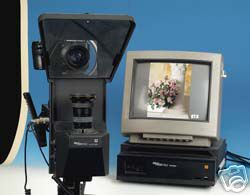
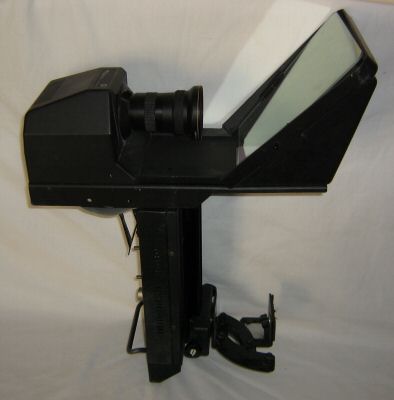
KODAK PRISM XLC ELECTRONIC PREVIEWING SYSTEM - 1988.
This system eliminated the need for Polaroid prints to preview film
prints while doing studio photography. It used a still video system to
show the photographer and model in real time what the finished paper
print would look like when returned from the print lab. It also allowed
the photographer to tell the print lab which shots to print therby
saving time and trips to the lab. Images could be stored on mini still
video floppy dics available at that time and could be played back using
a still video player/recorder.
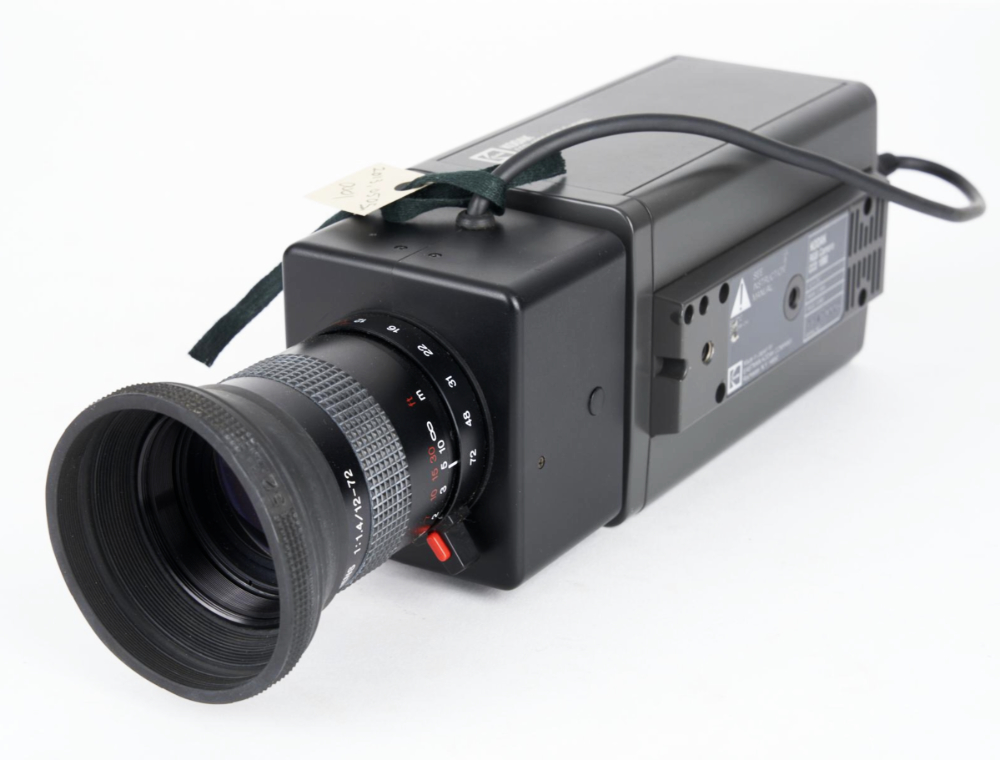
KODAK CCD-1000 RGB CAMERA - 1988.
The CCD-1000 was a professional CCD sensor camera which utilized the
Kodak E3 CCD sensor and Sony CFA memory card . The CCD-1000 was only
marketed in the US and Canada. Resolution was NTSC output 320 TV lines
and RGB output 350 TV lines. It was used in the Kodak Still
Video Line-Up demonstration in New York in 1988.
https://www.ebay.com/sch/i.html?item=267391082567&rt=nc&_trksid=p4429486.m3561.l170197&_ssn=digitalkameramuseum
https://collections.eastman.org/objects/532340/kodak-ccd-1000-rgb-camera?ctx=18451406-0019-434c-ba52-c5b6a53aea14&idx=28
https://www.peterjsucy.com/wp-content/uploads/2025/11/CCD1000Camera.pdf
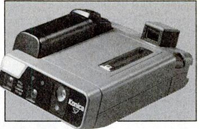
KONICA KC-100 - 1988. Still video camera. Predecessor to the KC-300 shown below. Stored up to 50 analog photos at up to 15 photos per second on a mini floppy disc. Popular Photography, May 1988, page 71. NOT MARKETED.
http://camera-wiki.org/wiki/Konica_KC-100
https://www.digitalkameramuseum.de/en/esvc/item/konica-kc-100-1988
http://camera-wiki.org/wiki/Konica_KC-300
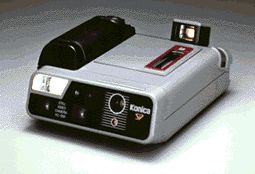
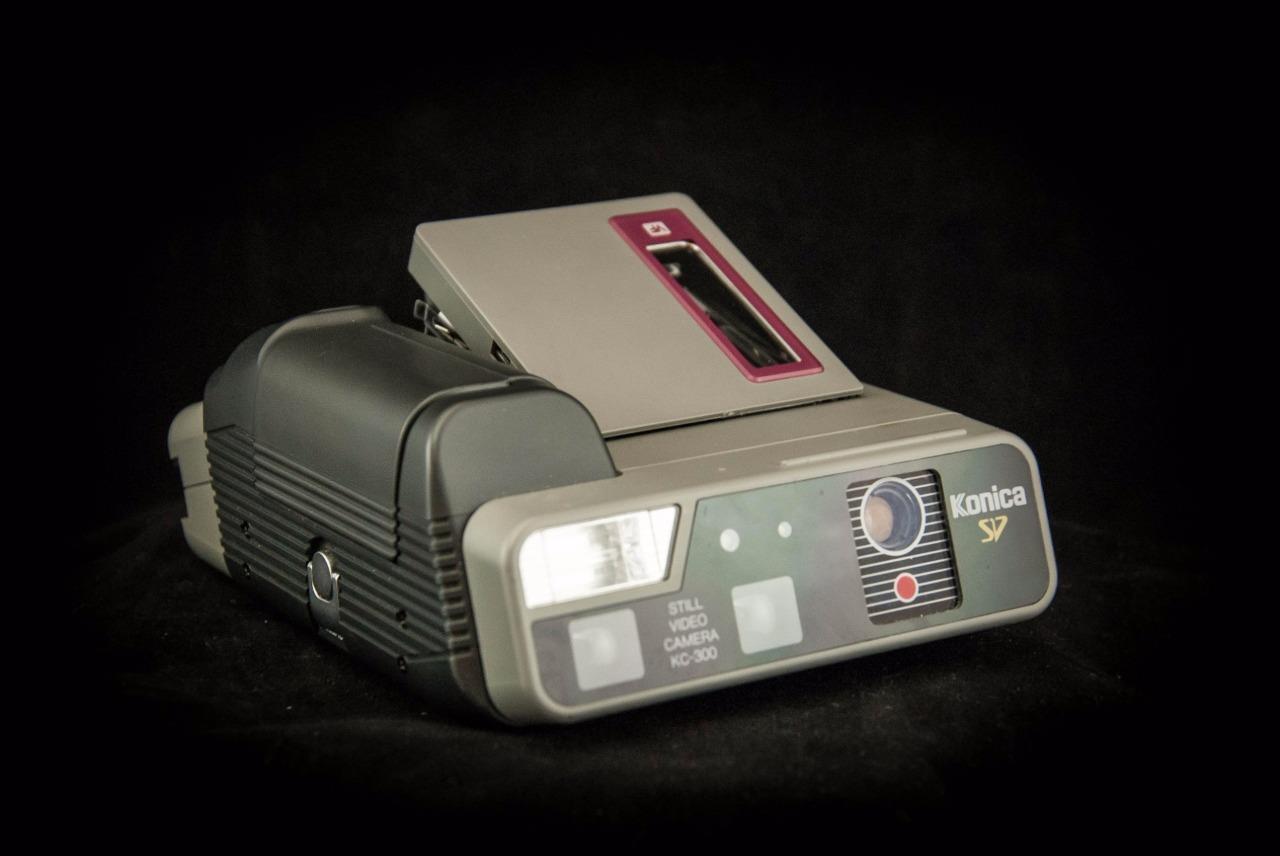
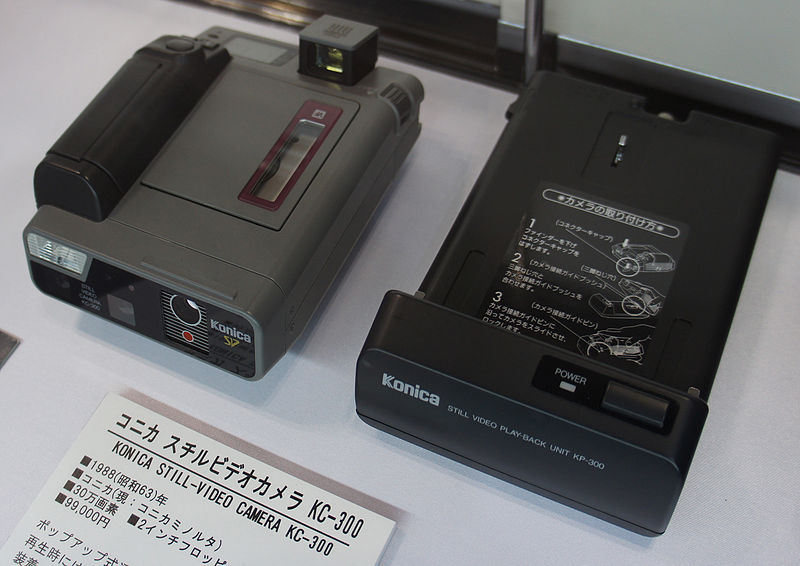
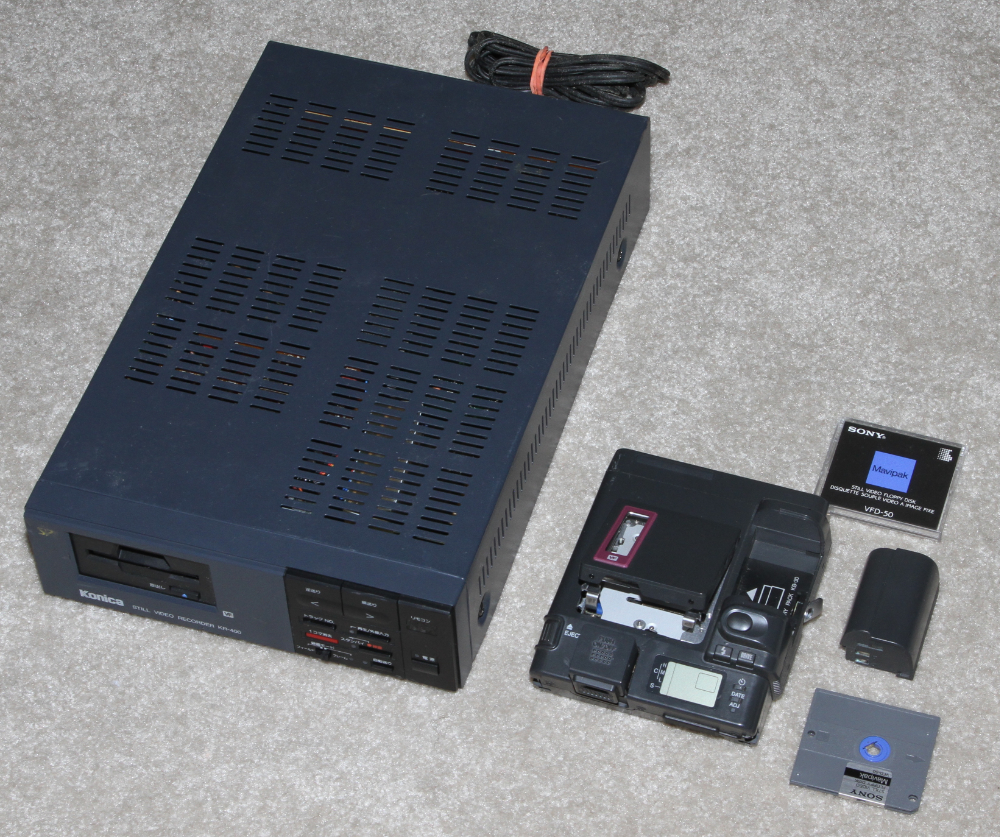
KONICA KR-400 STILL VIDEO PLAYER KONICA
KC-300B CAMERA MINI FLOPPY BATTERY PACK
KONICA KC-300, KC-300B - 1988. Still video cameras. 1/2-inch, 300K CCD. ISO 100. Fixed-focus 12mm f/2.8 lens. Shutter 1/15 to 1/2000 second. Built-in flash. Price in Japan, $720. Images were recorded on mini floppy disks which could then be shown on a TV using a still video player such as the Konica KR-400 shown above and below. KC-300B may have referred to a black version marketed only in Japan, but as seen above, there seems to have been at least three other versions: light gray and black, dark gray and black, and an all dark gray version, one of which may have been a prototype. The one advertised as 300B which appears to be black (bottom right), is only identified as KC-300 on the front. The battery pack for KC-300 is unusual in that it is shaped as part of the camera (see top right of camera for attachment point). KR-400 still video player shown at left on bottom photo. Mini floppy shown in bottom photo that recorded still images. Price, $675-720 U.S. in Japan. Battery charger playback unit KP-300 $215 U.S.(photo above on the right). Accessory kit $130 U.S. Popular Photography, December 1991, p108. Understanding Electronic Photography, John J. Larish, 1990, p36. Sold only in Japan. (Extremely rare on U.S. eBay)
http://camera-wiki.org/wiki/Konica_KC-300
https://www.digitalkameramuseum.de/en/esvc/item/konica-kc-300-1988
https://commons.wikimedia.org/wiki/File:Konica_KC-300_and_Konica_KP-300_CP%2B_2011.jpg
https://www.digitalkameramuseum.de/en/esvc/item/konica-kc-300b
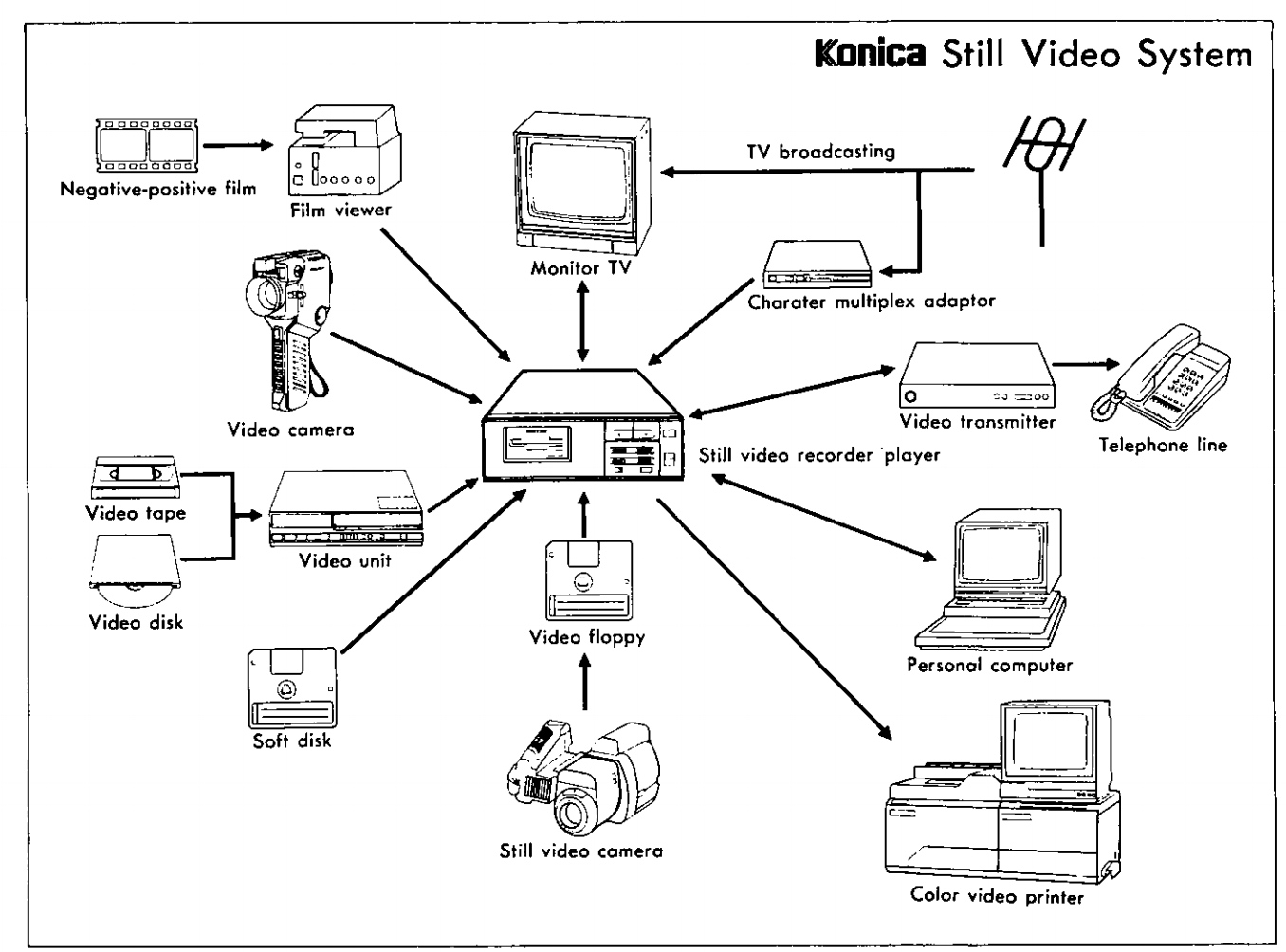
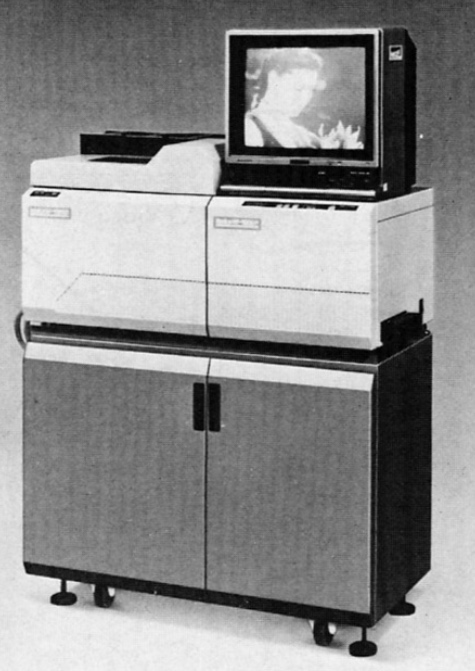
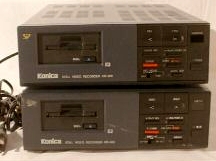
KONICA KR-400 STILL VIDEO PLAYER - 1997/88. The
KR-400 was first shown at the Chicago Consumer Electronics Show of
September 87. The KR-400 SVR would accept images from negative or
positive process film via the film viewer, from a TV transmission or
videocassette recorder, a video disc or CD-V stills, from software on
disk, through to PC text and graphics, and from the KC-300 and KC-400
Still Video Cameras. The KR-400 is very rare on U.S. eBay, but in
2005 I purchased a pair for a total of $60 including shipping!
https://research.konicaminolta.com/jp/pdf/technology_report/1988/pdf/8.pdf
https://www.worldradiohistory.com/AUSTRALIA/Australian-Electronics/AU-AEM-1987-09.pdf (Pages 30-31)
MACINTOSH
IMAGE PROGRAMS - 1988.
Digital Darkroom by Silicon Beach Software was the first image
manipulation program for the Macintosh computer (grayscale only). The
PhotoMac by Avalon Development was
the
first color image manipulation program available for the Macintosh.
Information kindly provided by Michel Coste of
http://www.micmac.com/ .
http://en.wikipedia.org/wiki/Silicon_Beach_Software
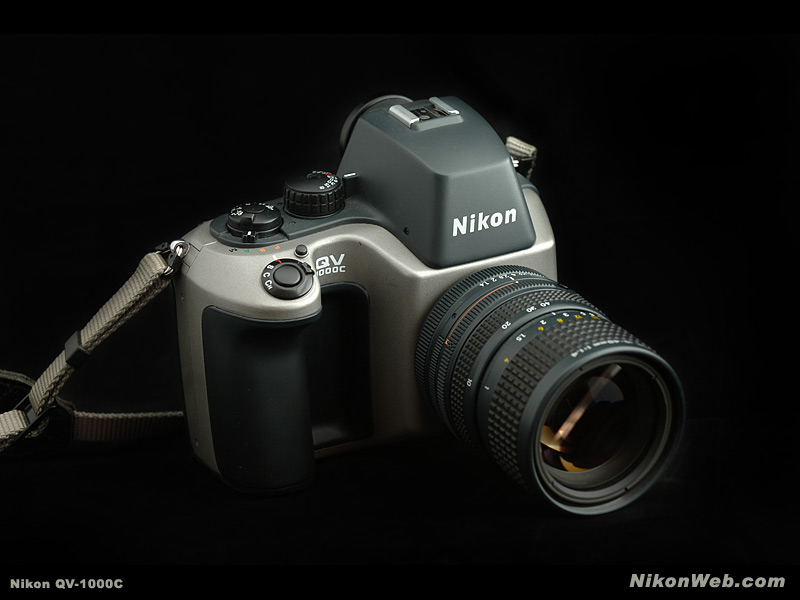
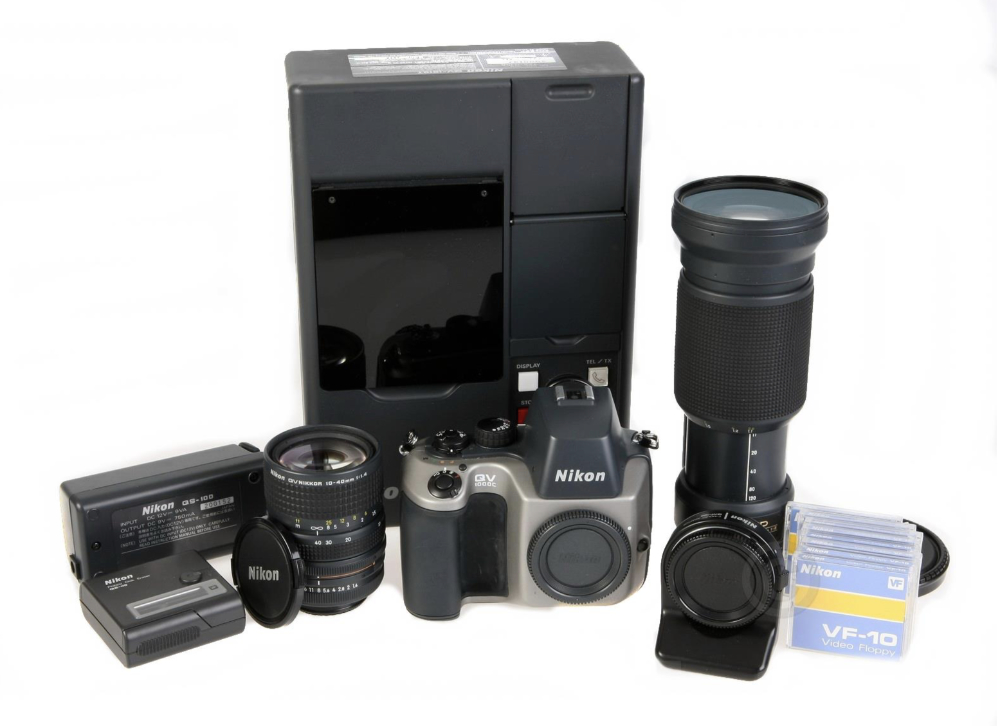
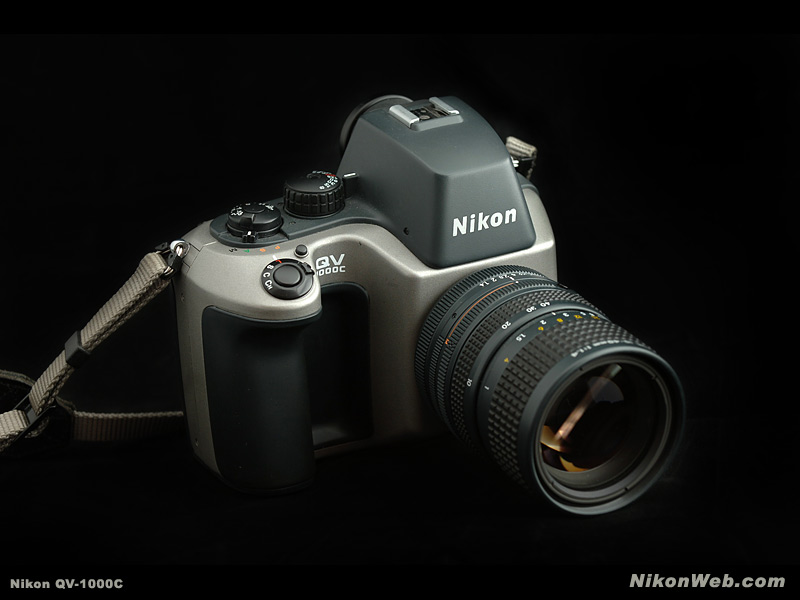
Copyrighted Photos by Jarle Aasland, http://www.nikonweb.com/qv1000c/gallery/qv1000c_800px.jpg
NIKON
QV-1000C - 1988. SLR
monochromatic still video camera. Another camera that has
become iconic and thus commands super premium prices. About 180
units
sold. Although this is a relatively low production, it is not low
enough in comparison to the greater rarity of many other cameras to
justify the very high prices sold for on eBay and elsewhere. One
auction site shows a sale price of 7,800 Euros!
2/3-inch, 380K CCD. ISO 400, 800,
and 1600. Nikkor 10-40mm f/1.4, 11-20mm f/2, or F-mount lenses
with F-mount adapter. Focal plane shutter 1/8 to 1/2000
second. Nikon QV-1000T refers to the transmitter unit designed to work with the Nikon QV-1000C still video camera. Price in U.S. with accessories, $20,300. Popular Photography.
December 1991. p109. Perhaps 180 kits marketed (see first URL below).
An interesting article concerning the QV-1000C appears under the title "Unlucky Cousins". The four-page article attempts to explain the market-place failure of the QV-1000: Still video cameras were used by a few newspapers on trial, and when carrying a photo taken by a still video camera, usually the caption "taken by still video camera or made by a still video camera" was placed below the photo. As most of pictures were poor in quality, it was a kind of excuse, it was due to the quality of the still video camera, not due to the lack of capacity of a photographer, nor the poor printing technique. However, the pictures taken by Nikon QV-1000C were never given such a caption in spite of many opportunities of being printed in newspapers. As the quality of the picture was as good as that of a silver-halide film picture, such an excuse quoting the name of the product might not be necessary. Thus the QV-1000C has lost the opportunity of being known by people, because its quality was good enough for practical use; it was an irony of the fate. In other words, according to the writer, the QV-1000 failed because it was so much better than other electronic cameras of the time! MARKETED TO MEDIA ONLY.
https://imaging.nikon.com/imaging/information/chronicle/cousins16-e/
http://www.nikonweb.com/qv1000c/
https://www.digitalkameramuseum.de/en/esvc/item/nikon-qv-1000c-1988
https://www.leitz-auction.com/en/Nikon-QV-1000C-outfit/AI-26-31076
PANASONIC
AG-ES10 - 1988. Still video
camera
(Canon RC-470) . 1/2 inch, 360K pixel interlaced scanning
CCD,
ISO 80 (Frame) and 160 (Field). Shutter 1/60 second.
Lens with two preset foci at 9mm (48mm) and 16mm (86mm) focal
lengths.
Price, $1,650 with adapter/charger. Popular Photography.
December 1991. p109. Two photos on the right by Nomura
Masato. (Rare onU.S. eBay)
http://camera-wiki.org/wiki/Panasonic_AG-ES10
PENTAX
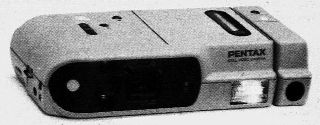
- 1988. Pentax prototype of EI
series
of still video cameras. Shown at Photokina '88. 1/2-inch
360K
CCD. B&W images recorded to floppy disk. 3X 8mm to 24mm
f/2.8 zoom. 10-20 seconds audio per frame. Understanding
Electronic Photography,
John J. Larish, 1990, p41. Click on
image
for enlarged view. NOT MARKETED.
https://www.digitalkameramuseum.de/en/esvc/item/pentax-ei-series-svc-1988
POLAROID
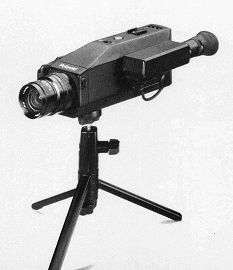
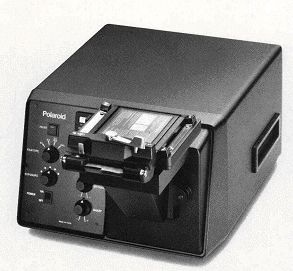
8801 HiRES STILL VIDEO CAMERA AND COMPANION PRINTER - 1988. The
Polaroid HiRES still video system was capable of capturing both B&W
and color still images. Resolution was 1134 x 486 (551,124)
active
pixels in the still mode and 1134 x 972 (1.1MP) pixels in the interlace
mode. The CCD was 2/3-inch in size. The system consisted of
a camera, a control unit, and a printer using Polaroid type 53 or 55
film
for hard copy. ISO was approximately 600 and shutter speeds
varied
from 1/60 to 1/500 second. This system was unique in that is
recorded
sill images on VHS video tape. Up to 14,000 high resolution (1134
x 486) images could be stored on a single tape. The HiRES control
unit was able to store images in digitized form so that they could be
also
stored on magnetic or optical disks as well as being adjusted by image
editing programs. Hard copies of 4 x 5-inch size could be printed
instantly by using the companion printer which had a high resolution
flat-faced
CRT monitor for that purpose. A color version of the system, the
G camera, was demonstrated at Photokina '90. Color was obtained
by
three consecutive exposures through RGB filters. Total color
exposure
time was as little as three seconds capturing approximately 3.6MP of
information.
The Polaroid 8801 still video system was used at the Democratic
National
Convention in 1988. Images were transmitted to an Associated
Press
electronic darkroom at the convention center and then to the AP
headquarters
in New York. The normal silver-halide steps of photographing,
developing,
and then scanning were bypassed. Instead, all images were handled
electronically with the first hard copies appearing only at the
receiving
newspaper's Wirephoto machine (Larish, John J. Electronic
Photography.
1990. P99). Information, photos, and drawing were provided
by Richard Kee who was Director, Electronic Imaging, of the group at
Polaroid
that developed the 8801 system. MSRP $20,000.
https://www.digitalkameramuseum.de/en/esvc/item/polaroid-8801-1988
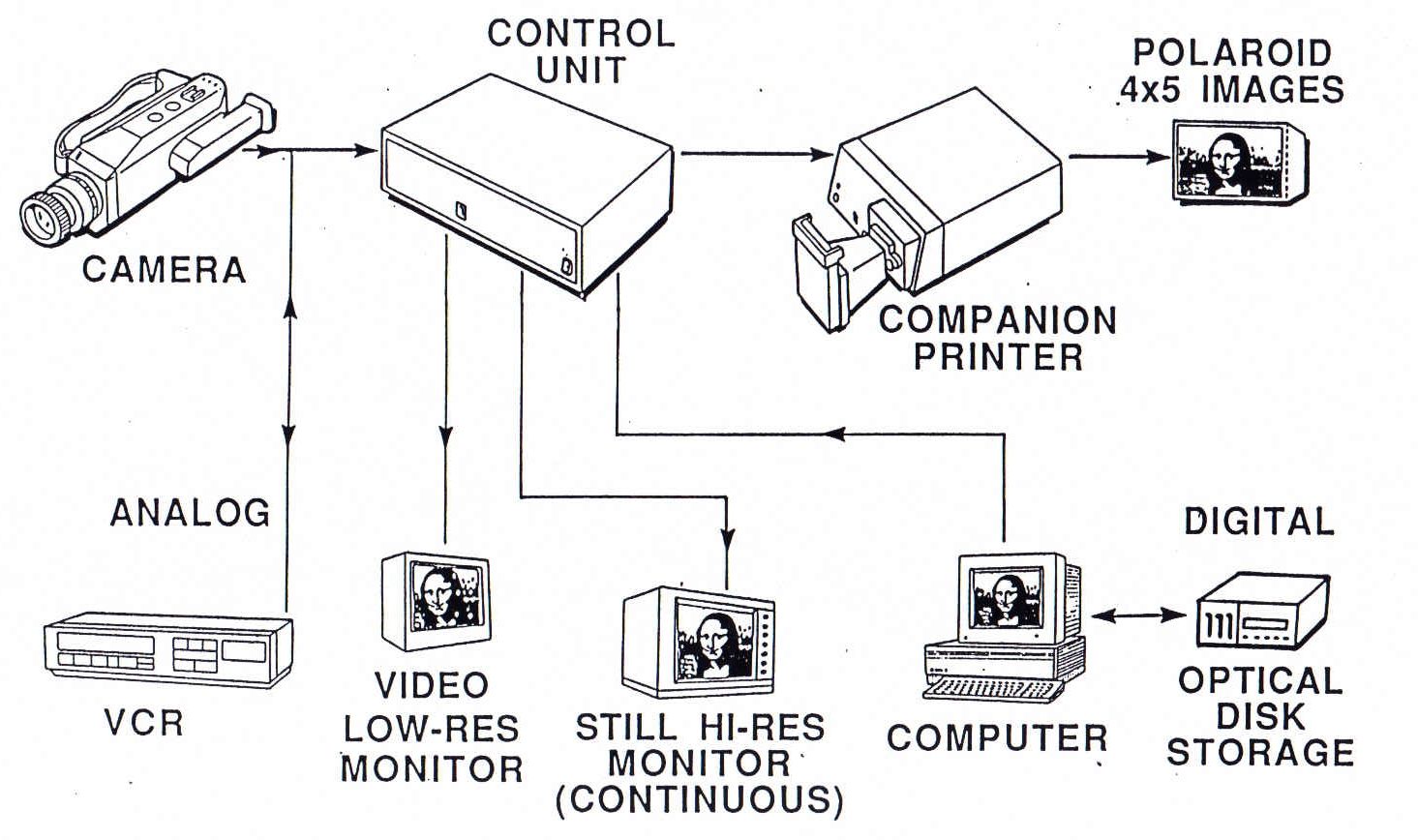
Polaroid
8801 HiRES system showing various viewing and recording options.
Click on diagram to see large image.



Richard Kee of Polaroid accepts the first order for Polaroid's electronic imaging
system from Hadland Photonics of the United Kingdom on May 18, 1988. Hadland
used the Polaroid camera in their SV-553 system designed for hi-speed photography.
They were the first to use still video photography to display instant still
photos of ballistic tests on a PC monitor. Exposure times were measured
in nano seconds - billionths of a second!
Polaroid chose not to pursue digital photography. Instead, the CEO elected to continue with instant photography. Mr. Kee disagreed with him, but Polaroid stopped the project killing the possibility of Polaroid becoming a successful entry in the developing digital camera industry. They eventually went the way of Kodak for similar reasons.
Vision and Foresight Ignored:
Richard Kee was Director of Research and Development at Polaroid in
1988. He was very prescient, clearly seeing the imminent
advancement of digital technology, but his vision was ignored within
his own company. At the following URL you can view his historic
presentation at MIT on 30 March 1988: https://drive.google.com/file/d/1F1IGYvKZ8zIO0g3X_Rr4TeTEGMqYCNxl/view?usp=drive_web
In the presentation Kee listed the many advantages of digital
technology over film - and even more over instant (Polaroid prints) -
ability to manipulate the image, etc. With Polaroid - you were
stuck with the results - no control. Other advantages of digital
that Kee noted were: Merging of photos and text, electronic
transmission, multiple prints, and instant viewing of a photo.
Kee pointed out that the Sony 1981 Mavica camera had print capability
which even then equaled Polaroid's hard copy capability. "Need
company support to advance." More improvement required - it will
come! "Whatever you can imagine you can do!" We need to do
something now (to stay in the game). Floppies not good enough for
storage, need optical system. "Fifty percent of homes will have
computers by the time digital imaging becomes available."
Quality now is not good enough, need higher resolution - "We will get
there." Challenge Triangle: Quality / Cost /
Convenience. Needs: more pixels, speed of processing, high
volume sales, power, payback, pizazz - capture the public's imagination
- customer has to want it. "Biggest challenge is to ourselves -
bright future if you meet the challenges."
Thanks to Richard Kee's son, Kevin, for the above photo and information.
https://www.digitalkameramuseum.de/en/esvc/item/polaroid-8801-1988

Hadland
instant bullet photo (Approx. 400 Nano Seconds).
http://www.jrussbeauchamp.com/dcs/extras.phpe
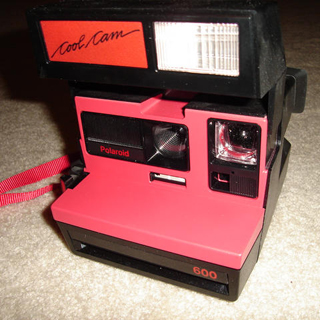
POLAROID COOL CAM 600 - 1988. One of the many popular Polaroid instant cameras marketed over the years since the original model 95 of 1948.
http://en.wikipedia.org/wiki/List_of_Polaroid_instant_cameras
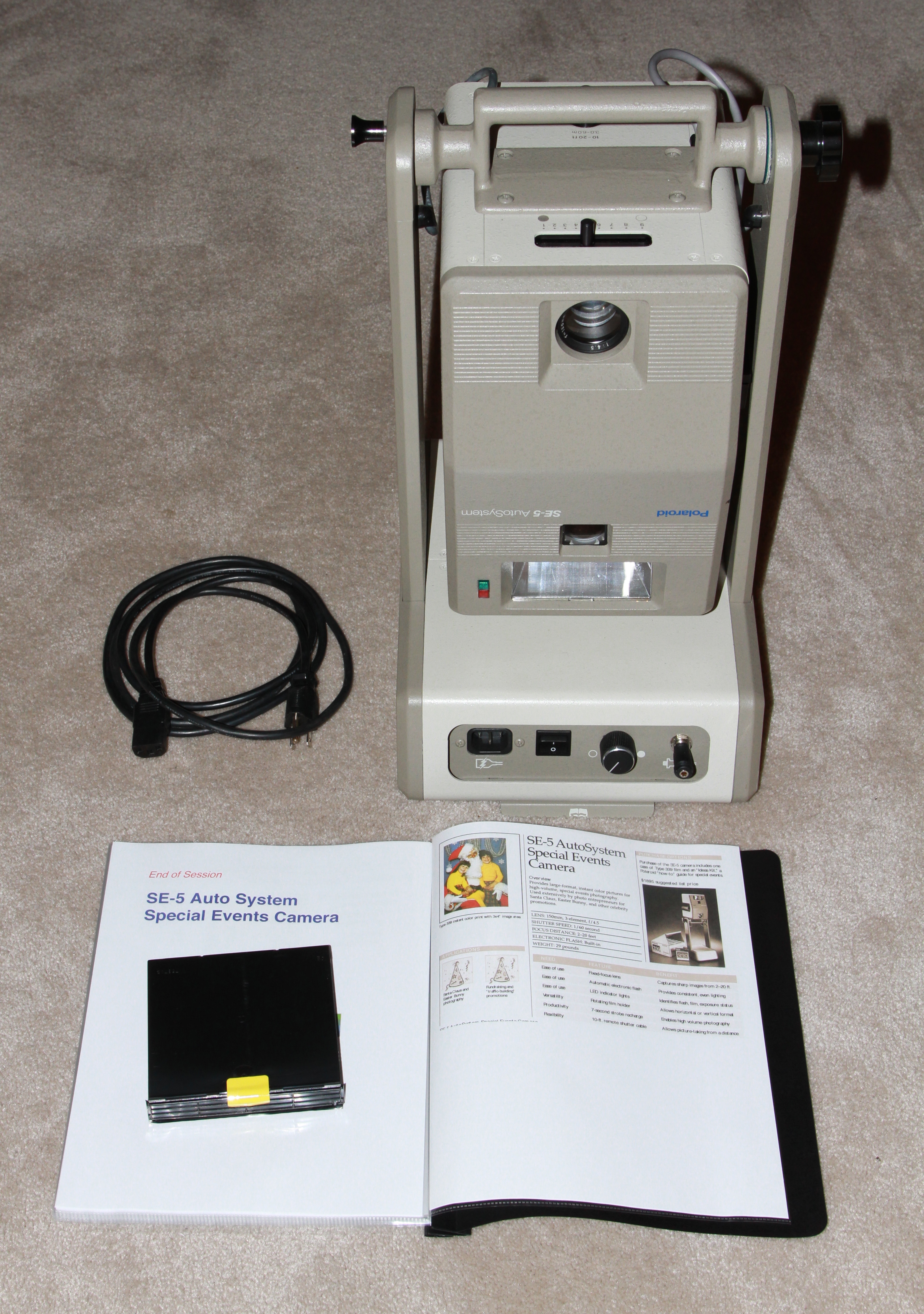
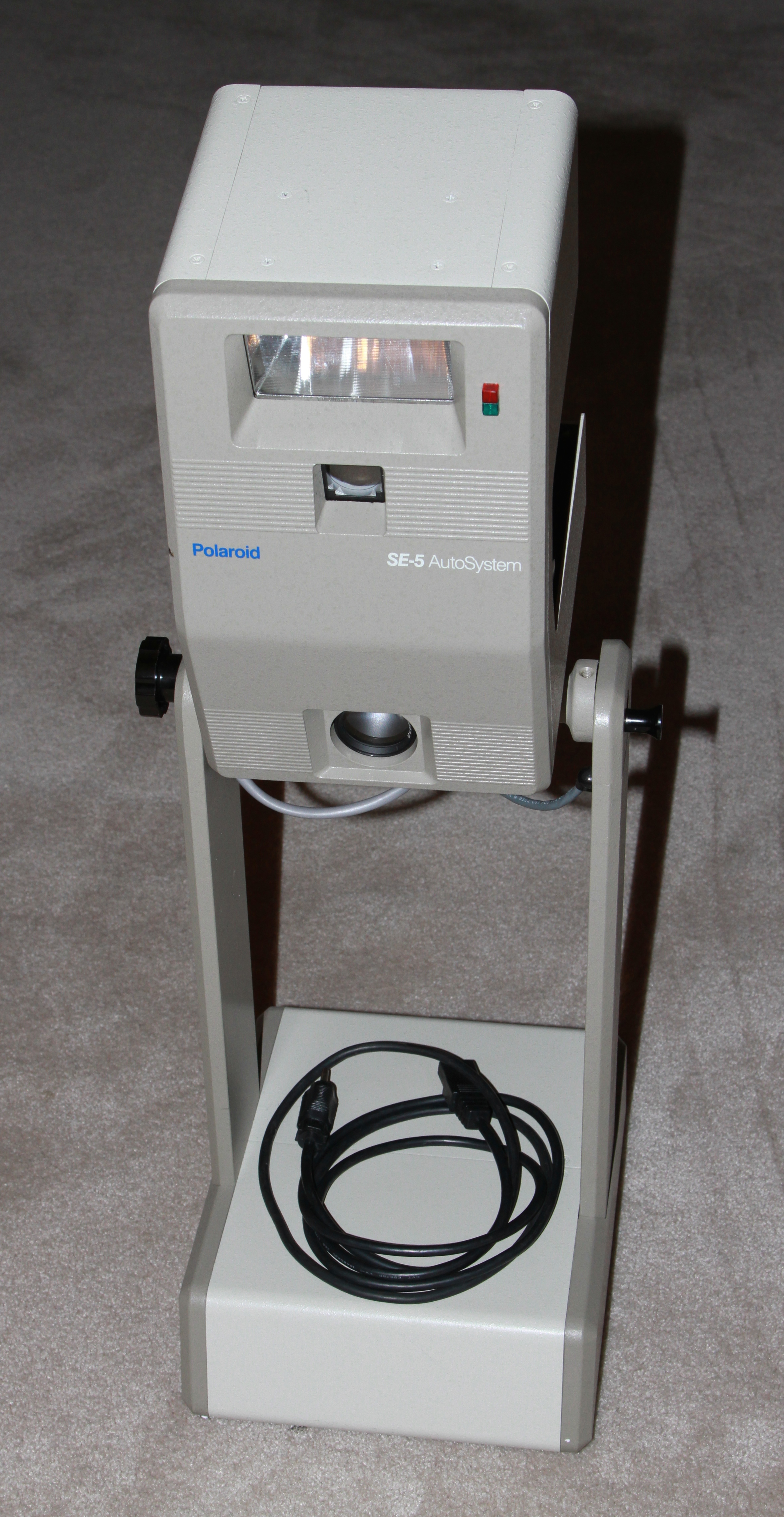
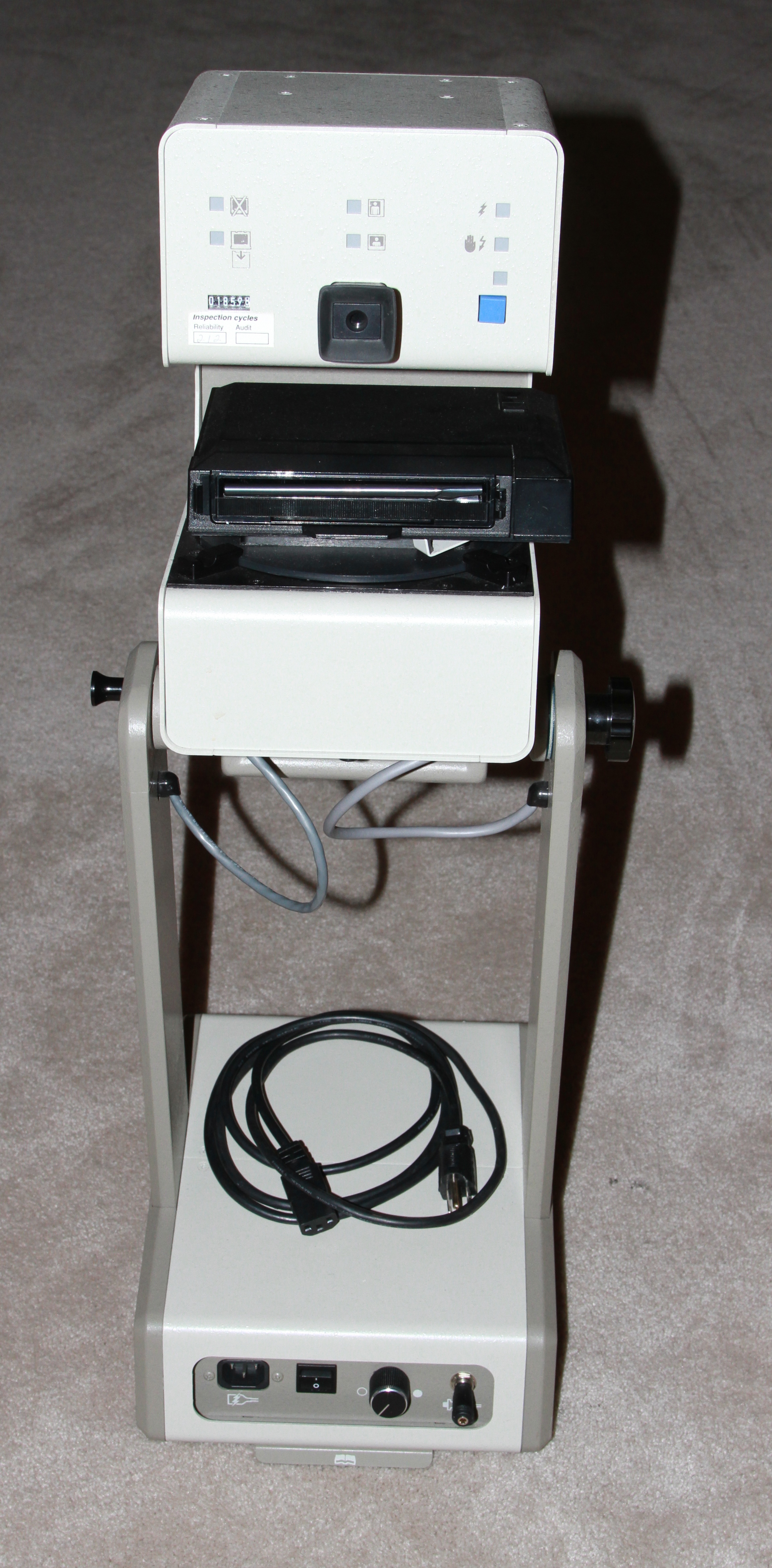
POLAROID SE-5 SPECIAL EVENTS CAMERA - 1988.
The SE-5 was another Polaroid system similar to the M500 ID System of
1975 in that most members of the public would not recognize it even
though they may have been photographed by it, maybe more than
once. The SE-5 Special Events Camera was used at school dances
and at shopping malls during Christmas when young moms with kids would
line up for photo's with Santa Claus at $5 each. The first photo
is of the camera in the stowed position - note the carrying handle on
top. The next two photos show the camera in the open ready-to-use
position. The camera used
film packs of Polaroid 399 instant film. F4.5, 150mm lens.
Shutter 1/60 second. It produced 3 x 4 inch prints. This
particular sample shows no signs of use whatsoever except for the photo
counter. It is very sturdy and reminds one of equipment seen in a
doctor's office. Weight is 29 lbs. MSRP $1,895 ($3,790 in
2014 dollars).
http://camera-wiki.org/wiki/Polaroid_SE-5
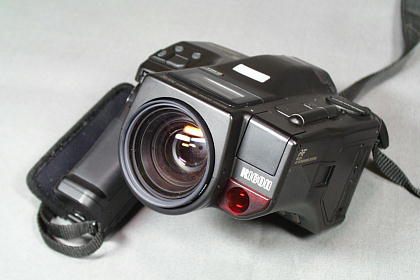
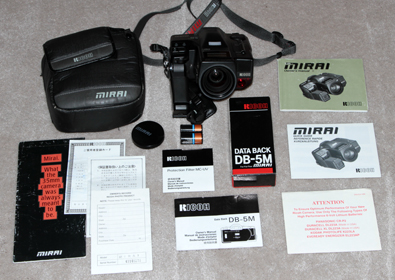
RICOH MIRAI - 1988. The owner of this camera kept all the paperwork that came with it - something every buyer should do as it increases the value of the camera to a collector when the time comes to sell it. Note the hand grip on the left which served as the battery compartment and was also adjustable as to angle. The Ricoh Mirai was a 35mm, autofocus camera launched by Ricoh in 1988. It was equipped with a 38--105 mm auto zoom lens made of 12 elements in 11 groups. The Mirai was extremely compact and easy-to-use, featuring LCD panel, and a viewfinder system.
http://camerapedia.wikia.com/wiki/Ricoh_Mirai
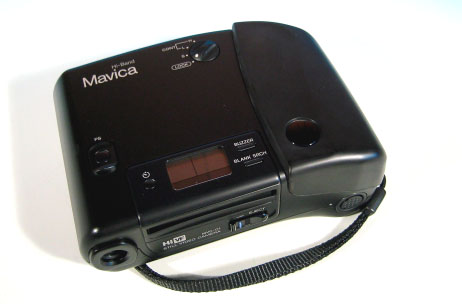
SONY MAVICA MVC-C1
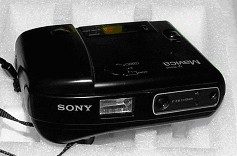
SONY MAVICA MVC-A10
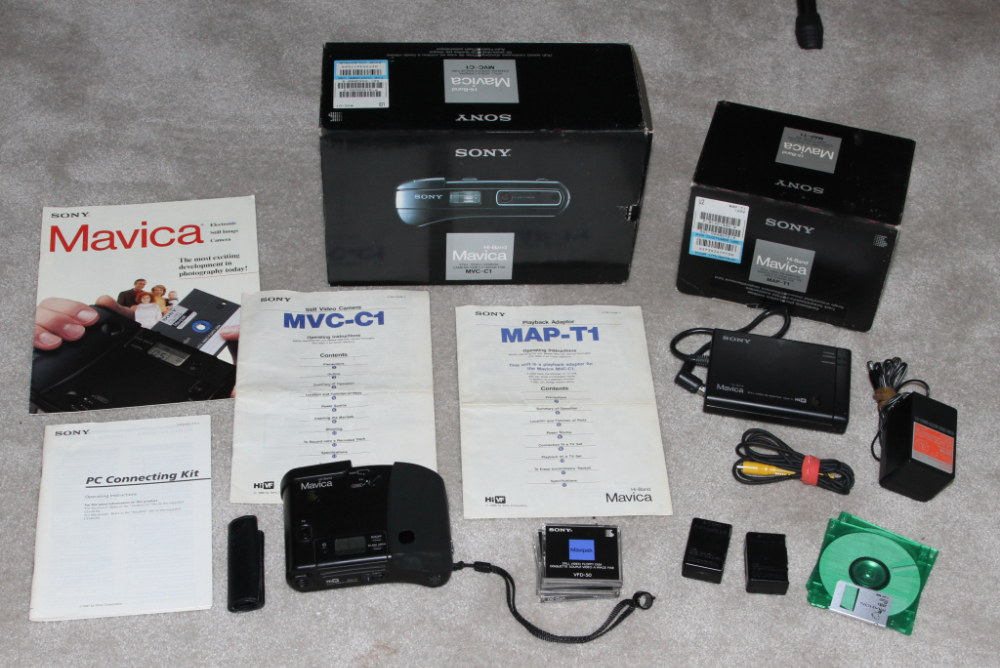
SONY
MAVICA MVC-C1 PERSONAL CAMERA AND MVC-A10 SOUND MAVICA - 1988. The
MVC-A10 ($350) and MVC-C1 ($230) were Sony's first Hi-band still
video cameras intended for the consumer market. Both cameras were
essentially the same except that the A10 could record up to 9.6 seconds
of sound with each of 25 images when in Field mode. Both cameras
had a 2/3-inch 280K MOS image sensor, ISO 80. Lenses were 15mm
f/2.8
with shutter speeds of 1/60 to 1/500 second. Features
included
built-in flash, self-timer, and MAP-T1 Playback Controller for viewing
photos on a television set. Popular Photography.
December
1991. p109. Click on left photo to see large image of C1 with
acessories. (Rare on U.S. eBay)
http://camera-wiki.org/wiki/Sony_Mavica_MVC-C1
https://www.digitalkameramuseum.de/en/esvc/category/sony-3
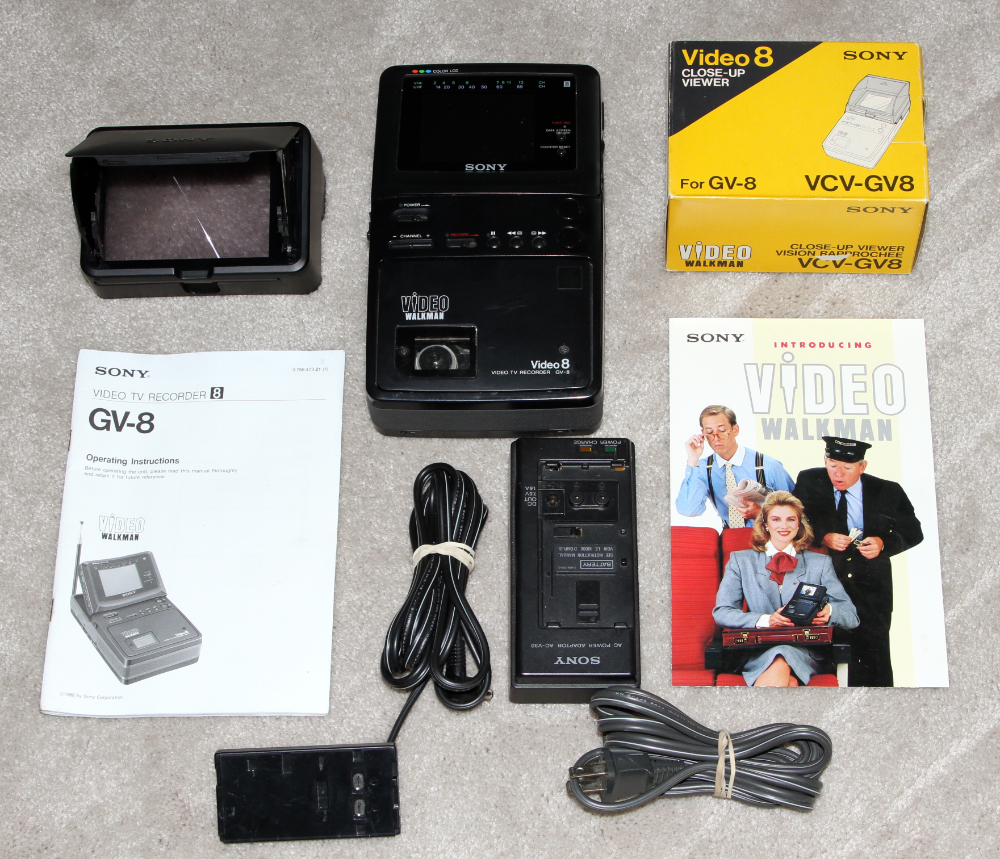
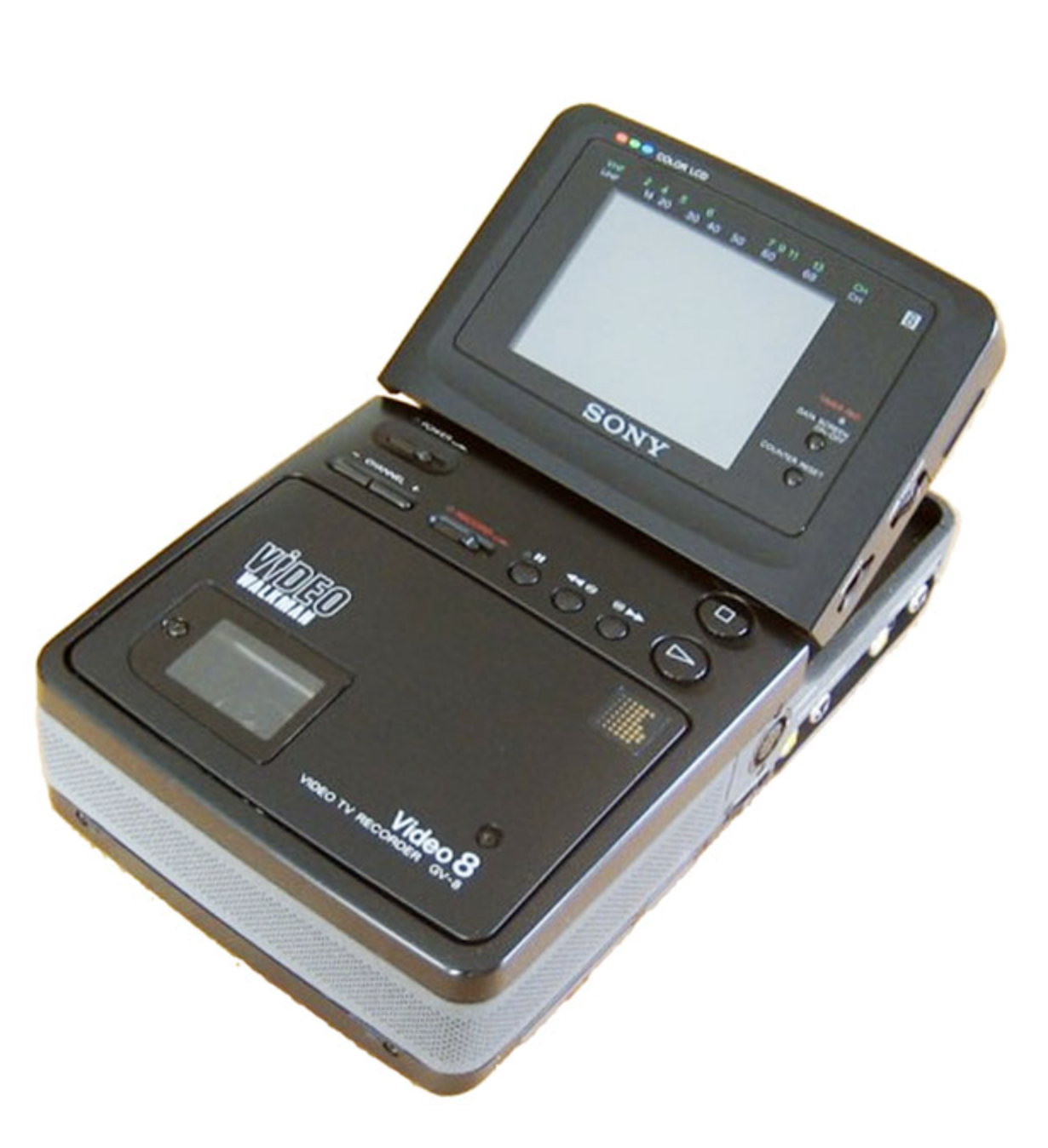
SONY GV-8 VIDEO TV RECORDER / VIDEO WALKMAN - 1988.
Almost everyone is familiar with the Sony D-5 Discman portable CD
player of 1984. However, many may not be aware that Sony also
marketed a similar portable TV device in 1988, the GV-8. The GV-8 had a
3-inch color liquid crystal diode screen with active matrix system and
used the 8mm video tape format. The VCR component of the GV-8
featured a high-speed picture search to scan recordings; a one-day,
one-event timer for time-shift recordings; and a built-in TV tuner with
full VHF and UHF channel reception. The unit operated on AC or DC
current, rechargeable NP-55 battery or alkaline batteries when used
with an optional adaptor. A close-up viewer attachment, the
VCV-GV8, was also available. MSRP $1,300 ($3,000 in 2021 dollars).
https://www.washingtonpost.com/archive/business/1988/06/06/sony-launches-2-personal-video-products/3617ce7e-9588-4024-af79-8ebc1c109d63/
https://www.reddit.com/r/sony/comments/1bsedtc/sony_video_walkman_gv8_1988/
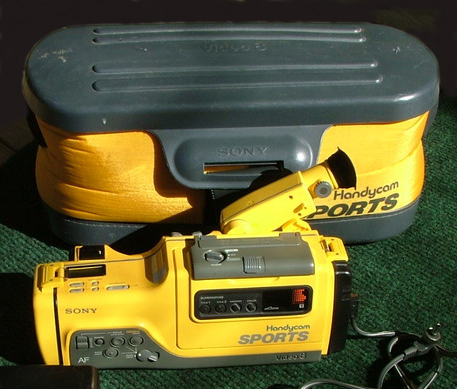
SONY CCD-SP7 SPORTS HANDYCAM - 1988. The
splashproof CCD-SP7 was designed for resistance to moisture when
recording so that it could be used outdoors under less than desirable
conditions. Sony directed repair technicians to check them for
watertightness in the shower after any repairs had been made. (Not too
sure that many electronics repair shops have showers on the premises.)
6X power zoom with six shutter speeds up to 1/4000 sec. MSRP $1,850
(about $3,550 in 2011). Popular Mechanics, February 1989, page
60.
https://www.youtube.com/watch?v=EaTBwhjiZkk
https://www.chicagotribune.com/1988/12/09/rugged-sony-ccd-sp7-a-camcorder-for-outdoors-types/
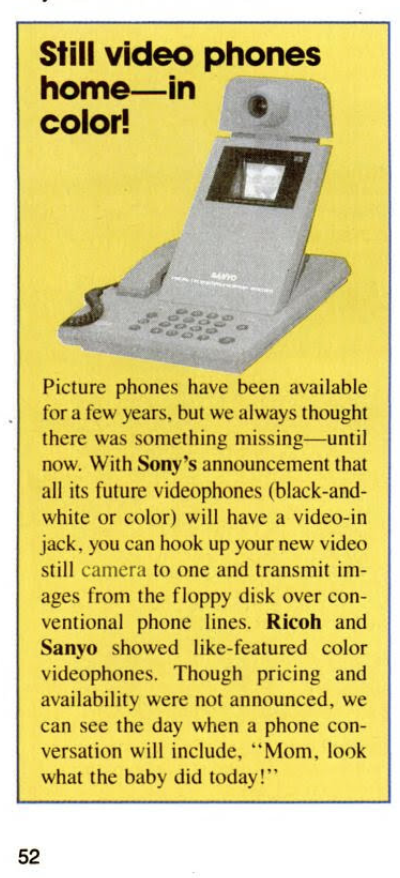
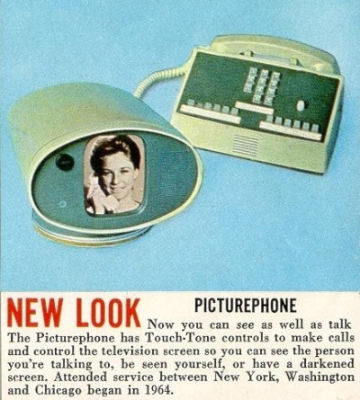
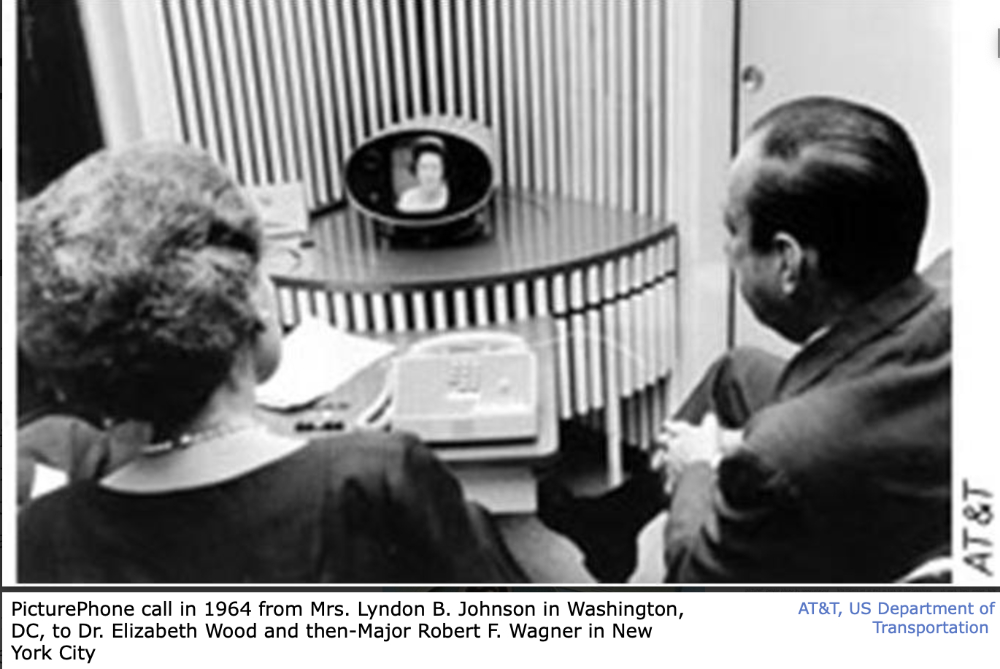
STILL VIDEO PHONES - 1988. In 1964, AT&T demonstrated the first video calls at the World's Fair in New York (Picturephone). The concept of video telephony is as old as the telephone itself, with theoretical systems being recorded as far back as the 1870s. The 1927 movie, Metropolis, involved a scene with a video phone. There was also a video phone sequence in the movie, 2001, A Space Odyssey. In 1988, video phones went on sale in Japan. In 1989, Sony announced a color video phone. What happened? With greatly improved technology and significantly lowered costs, video phones are still virtually non-existent. The answer is the idea has never caught on with the public. Apparently, people were only comfortable speaking face-to-face when the other person is actually physically present. Now, tablets with video capability perform that task.
https://ethw.org/Picturephone#:~:text=Bell%20Labs%20resumed%20video%20telephone,their%20own%20video%20telephone%20calls.
1988