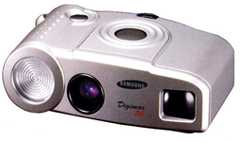
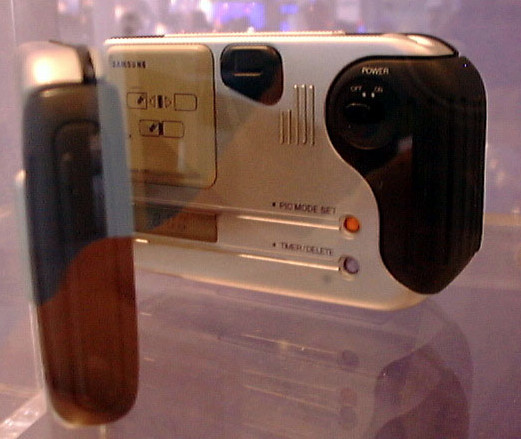
SAMSUNG Digimax 50 - 1998. Based on Intel PC Camera kit. Shown at CeBIT '98. 768 x 576 pixel CMOS image sensor. NOT MARKETED.
SAMSUNG
Digimax 50 - 1998. Based
on Intel
PC
Camera kit. Shown at CeBIT '98. 768 x 576 pixel CMOS image
sensor. NOT MARKETED.
http://pc.watch.impress.co.jp/docs/article/980327/cebit_4.htm
SAMSUNG
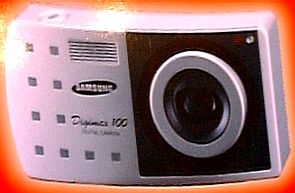
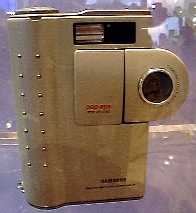
Digimax 100 - 1998. Shown
at PMA
'98.
1156 x 866 pixel CCD. NOT MARKETED.
http://pc.watch.impress.co.jp/docs/article/980216/pma_3.htm
SAMSUNG
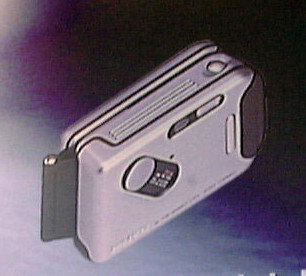
SDC-55 Pop-eye - 1998. Shown
at
CeBIT
'98. NOT MARKETED.
http://pc.watch.impress.co.jp/docs/article/980327/cebit_4.htm
SAMSUNG
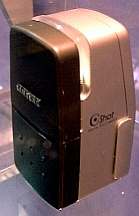
Cshot - 1998. Shown
at CeBIT
'98.
Designed for both right and left hand switchable operation. NOT MARKETED.
http://pc.watch.impress.co.jp/docs/article/980327/cebit_4.htm
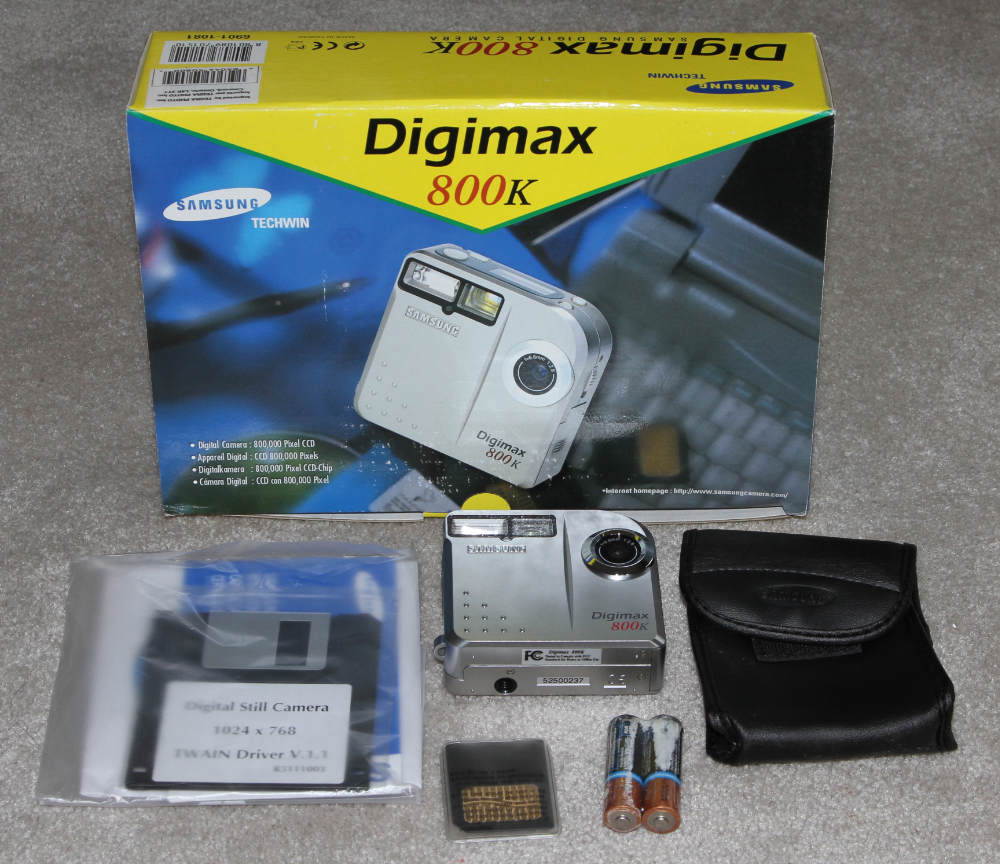

SAMSUNG DIGIMAX 800K - 1998.
Marketed early 1999. Manufactured by Minton Optics, but of higher
quality than others sold under various brand names. At that time,
Samsung advertised it as the world's smallest 800K pixel digicam.
1024 x 768 pixels. Lens: F2.8. Shutter: 1 sec to 1/10,000 sec.
MSRP: $199.
https://www.digitalkameramuseum.de/en/cameras/item/samsung-digimax-800k
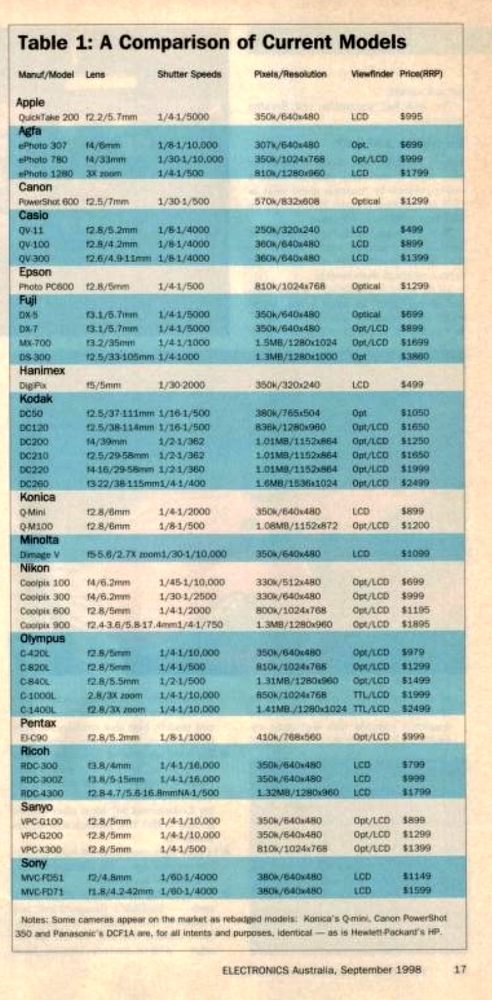
LIST OF DIGICAMS AVAILABLE IN 1998.
1998
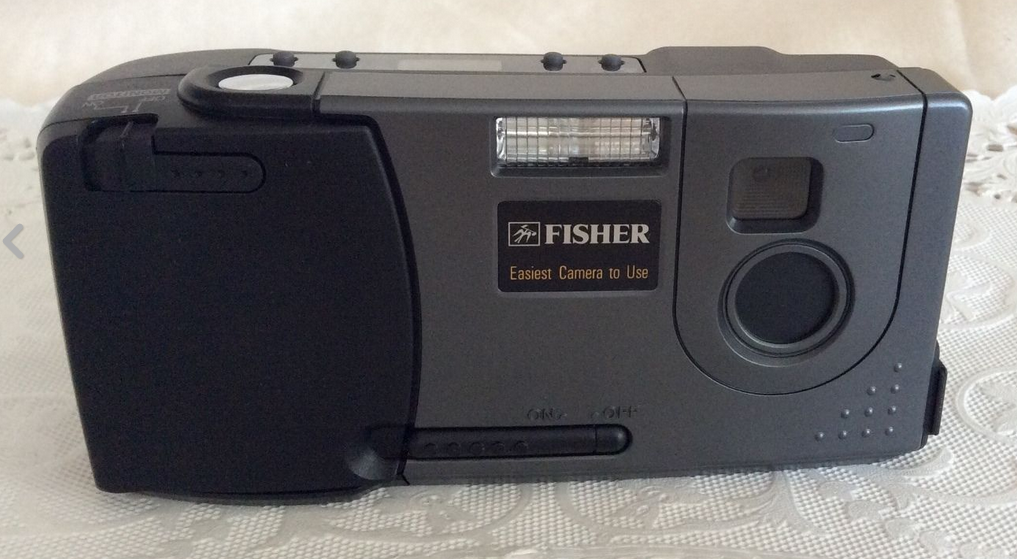
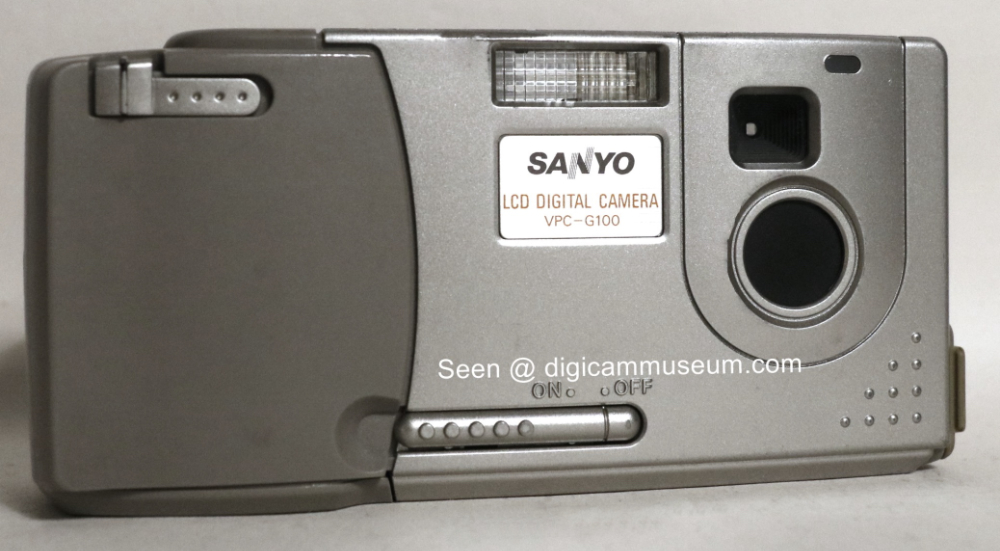
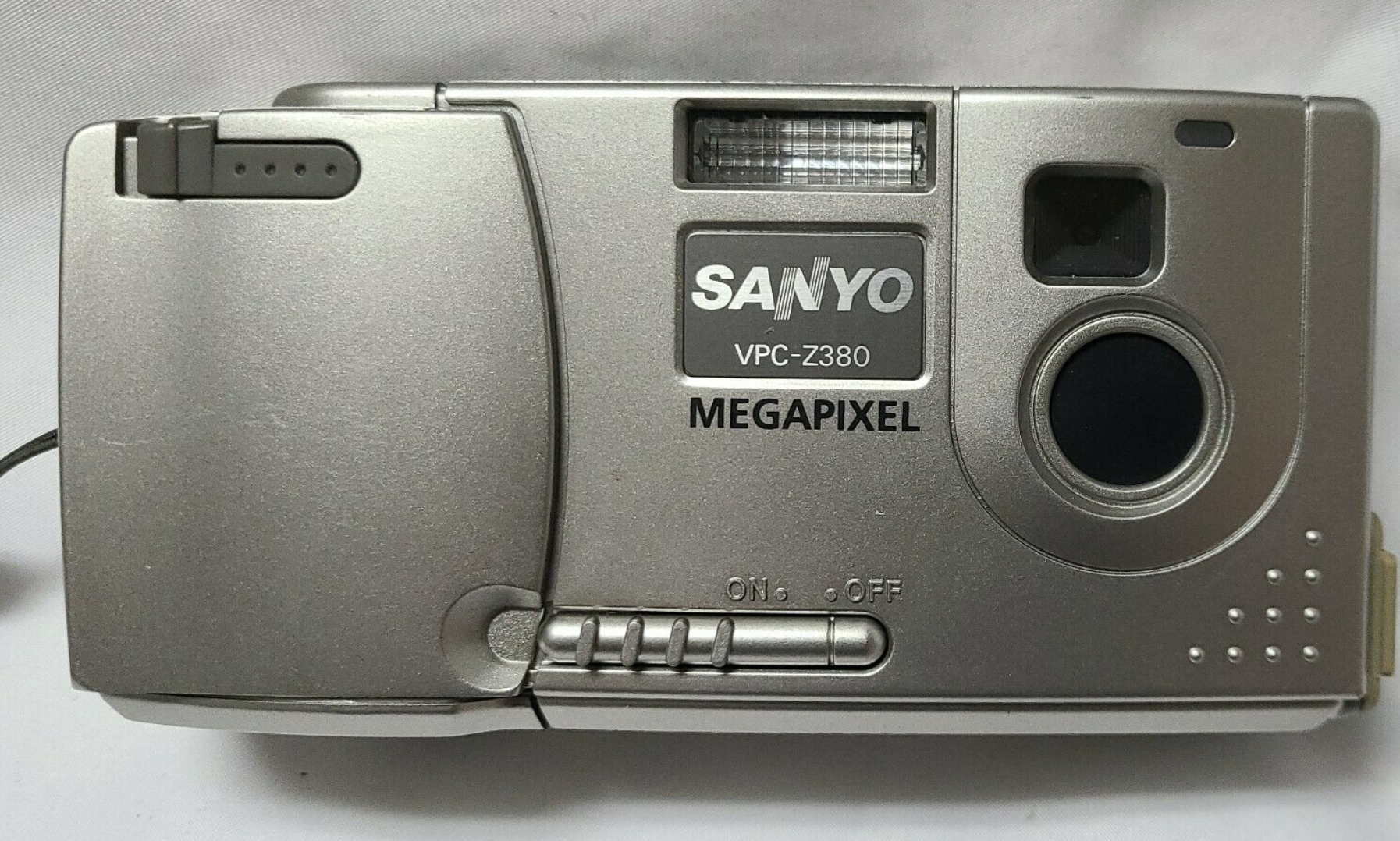
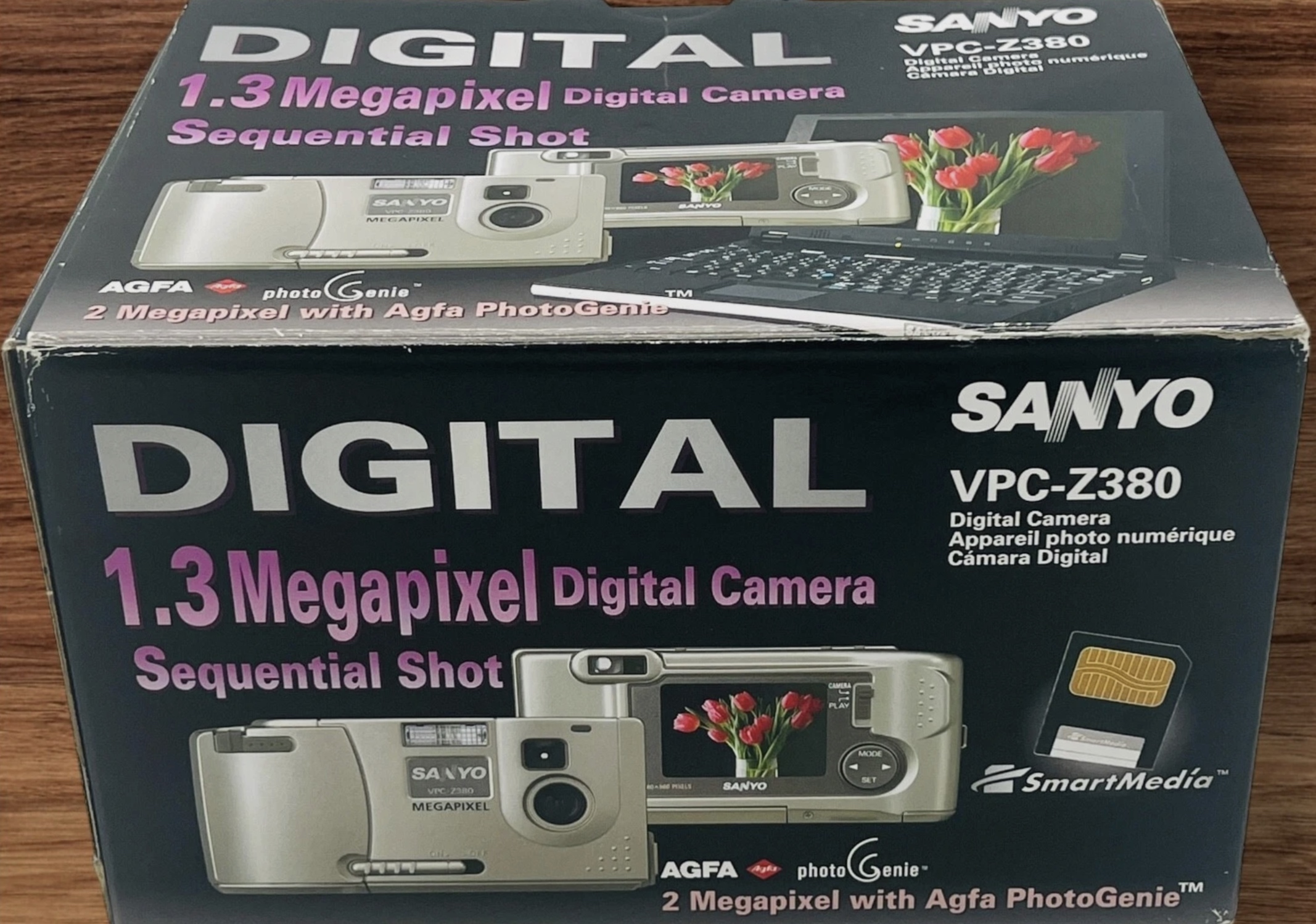
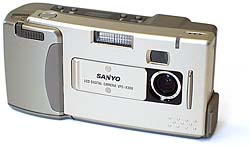
Sanyo VPC-Z380 and the 1998 Fisher FVD-V1 made by Sanyo are visual twins
of the 1998 VPC-G100 . See 1998 E-F for informati0on on the
Fisher FVD-V1
SANYO
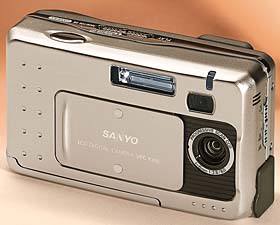
VPC-G210 - 1998. 1/3-inch
640 x 480
pixel CCD. ISO 80. F/2.8 36mm autofocus lens. Shutter
1/4 - 1/10,000 second. Similar to the VPC-G200 of 1997, but with
640 x 480 pixels rather than 1024 x 768 pixels.
http://www.computer-specifications.com/specifications/Sanyo-VPCG210-Specs.html
SANYO
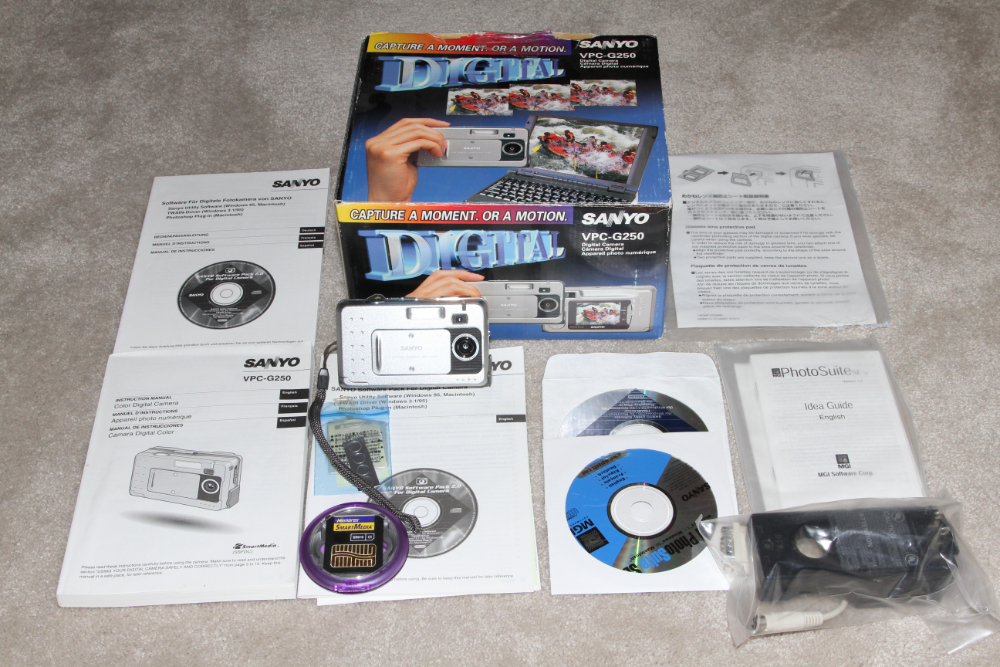
VPC-G250, - G250EX in UK (DSC-V100 in Japan) - 1998. 1/3-inch
640 x 480 pixel CCD. ISO 140. F/2.8 43mm lens.
Shutter
1/4 to 1/10,000 second.
G250 with 4MP card, G250EX with 8MP card.
https://www.digitalkameramuseum.de/en/cameras/category/sanyo-2
SANYO
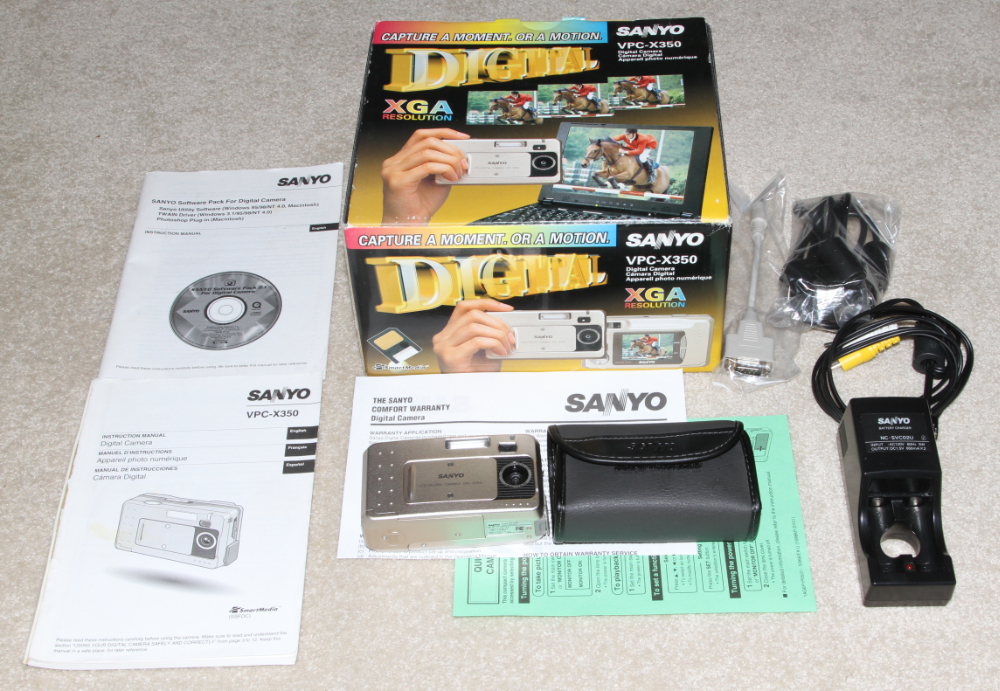
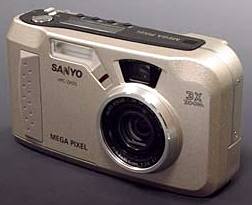
VPC-X350, -X350EX (DSC-X100 in Japan) - 1998. 1/3-inch
1024 x 768 pixel CCD. ISO 80. F/2.8 43mm fixed-focus
lens.
Shutter 1/4 to 1/10,000 second. X350 with 4MP
https://www.digitalkameramuseum.de/en/cameras/category/sanyo-2

VPC-Z44EX
DSC-SX1Z
SANYO
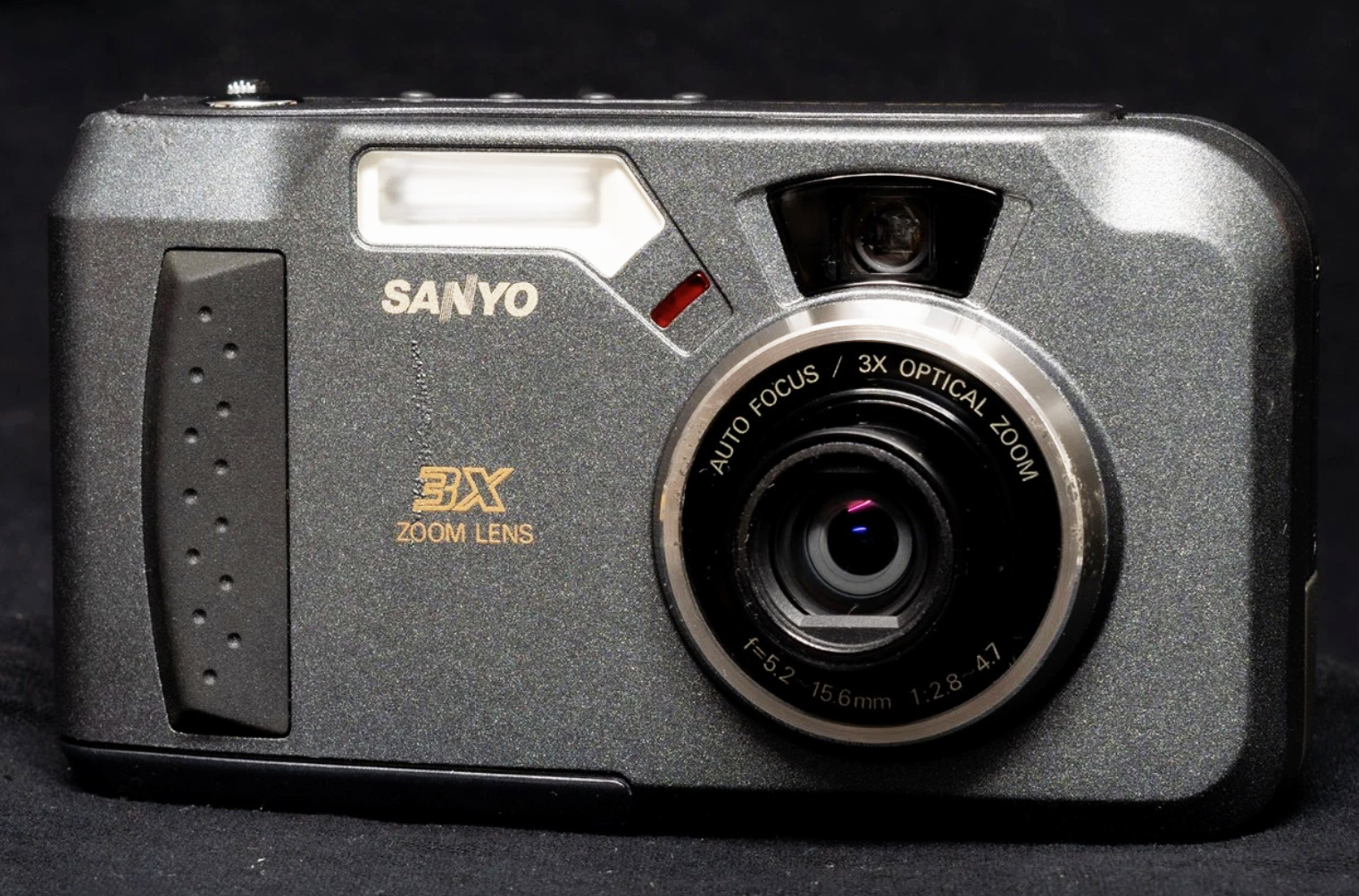
VPC-Z400EX (DSC-SX1Z in Japan) - 1998. First digicam with a solar panel for additional power. 1/2.7-inch
1280 x 960 pixel CCD. ISO 80. F/2.8 34mm - 102mm autofocus
zoom lens. Shutters 1/30 to 1/750 second.
https://pc.watch.impress.co.jp/docs/article/980921/sanyo.htm
SANYO MODEL NUMBERS. Sanyo generally uses different model numbers for Europe and Japan. Below are listed European and Japanese model numbers for 1996-98 cameras as far as we have been able to determine. If you have additional information please send an e-mail.
.............EUROPE......................JAPAN
1996...VPC-G1..........................Same?
1997...VPC-G200......................DSC-V1, DSC-1
1997...VPC-X300......................DSC-X1
1998...VPC-X350....................DSC-X100
1998...VPC-G210....................??????
1998...VPC-G250...................DSC-V100
1998...VPC-Z400...................DSC-SX1Z
SEAGULL
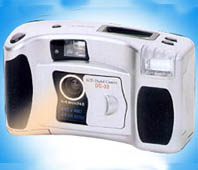
DC-33 (Polaroid PDC-640, Kinon DC-33, Agfa ephoto 780) - 1998. Many similar models of this camera sold by a numberof differnt companies, some with varied specifications. Similar to Agfa
ePhoto 780, and Kinon DC-33, but with 640 x 480 pixel CCD rather than
1028
x 768. F/4.5 fixed-focus 50mm lens. Shutter 1/30 to
1/10,000
second. NOT MARKETED.
https://en.wikipedia.org/wiki/Seagull_Camera
https://www.digitalkameramuseum.de/en/cameras/category/seagull
SEAGULL
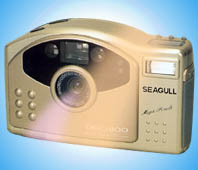
DSC-1100 (Kodak DC210 style copy) - 1998. Similar Kinon DC-1100,
style copy of Kodak
DC210 of 1997. 1/3-inch
1152 x 864 pixel CCD. ISO 140. F/2 lens. Shutter 1/4
to 1/500 second. NOT MARKETED.
https://en.wikipedia.org/wiki/Seagull_Camera
https://www.digitalkameramuseum.de/en/cameras/category/seagull
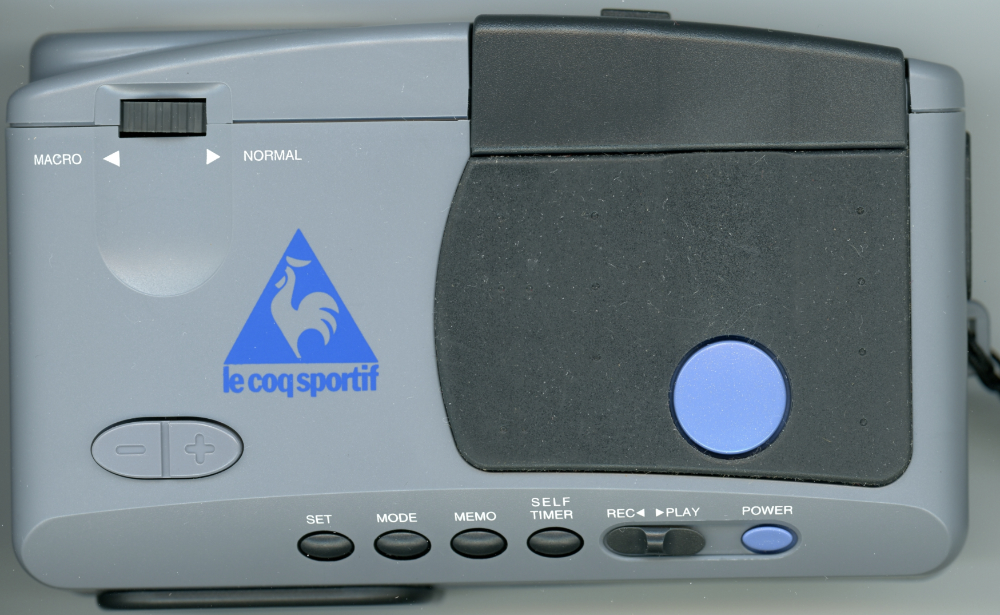
SEGA DIGIO SJ1 Le Coq Sportif Edition - 1998. Apparently
the same as the original SJ1 of 1996, but with the Le Coq sport brand
logo. 320 x 240 pixel CCD. 10mm f/1.9 lens.
https://www.digitalkameramuseum.de/en/prototypes-rarities/item/sega-digio-sj1-le-coq-sportif-edition
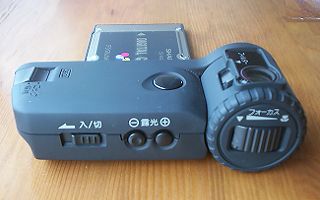
SHARP
MI-610 DC - 1998. Camera
insert (on right) for Sharp Zaurus PDA. 320 x 240 pixels.
https://pc.watch.impress.co.jp/docs/article/980303/sharp.htm
https://en.wikipedia.org/wiki/Sharp_Zaurus
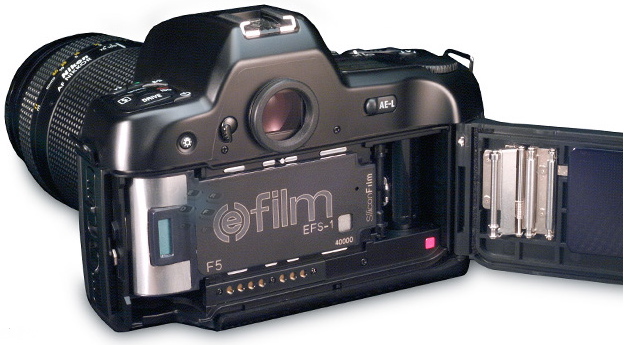
SONY
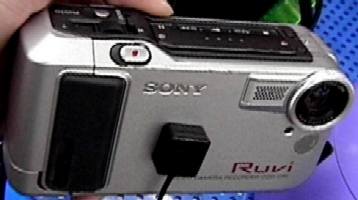
Ruvi DDC-CR1 - 1998. Camcorder/still
video camera. At the time of its introduction the Sony Ruvi
(Recording Unit by Video) was the world's smallest camcorder. The
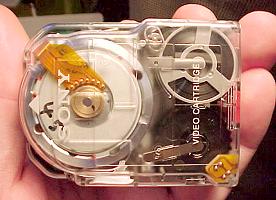
Ruvi CCD-CR1 could store up to 350 analog still images or 30 minutes of
Hi8XR video and monaural audio on an internal cartridge (Shown
above).
Still images could be stored with up to five seconds of audio
each.
The Ruvi had a 3X optical zoom lens and weighed one pound. It was
only 4 7/8" (W) x 2 5/8" (H) x 1" 3/4 (D) in size. 410k pixel CCD
with resolution of 400 lines horizontally.
MSRP
$799.
https://en.wikipedia.org/wiki/Ruvi
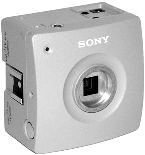
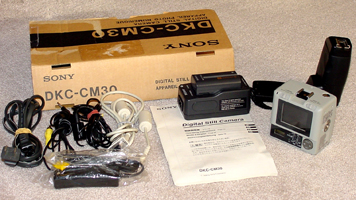
SONY DKC-CM30 - 1998.
The CM30 is an example of a camera specialized for technical,
industrial and scientific purposes such as microscope or astronomical
photography. It was sold without a lens, but had a C mount for
interchangeable lenses. Image sensor .33-inch color CCD, 640 x 480
pixels, ISO 90. Shutter 1 to 1/4000. It had 4 MB
of storage for 30 frames at maximum resolution. Images could be
displayed on its 110K-pixel color screen or on a video monitor. Check
the web site below to see lunar images taken by Kevin Smith using the
CM30.
http://www.users.globalnet.co.uk/~kevsmith/Lunar%20Imaging%20-%20Sony.html
http://www.camera-wiki.org/wiki/Sony
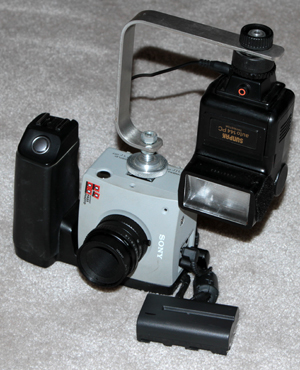
SONY DKC-2050X - 1998. Similar to the above, but set up for taking passport photos or other forms of ID. lens 16 mm, f/1.4.
https://www.pinterest.com/pin/531635930991165708/

SONY
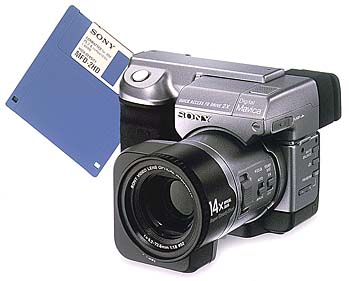
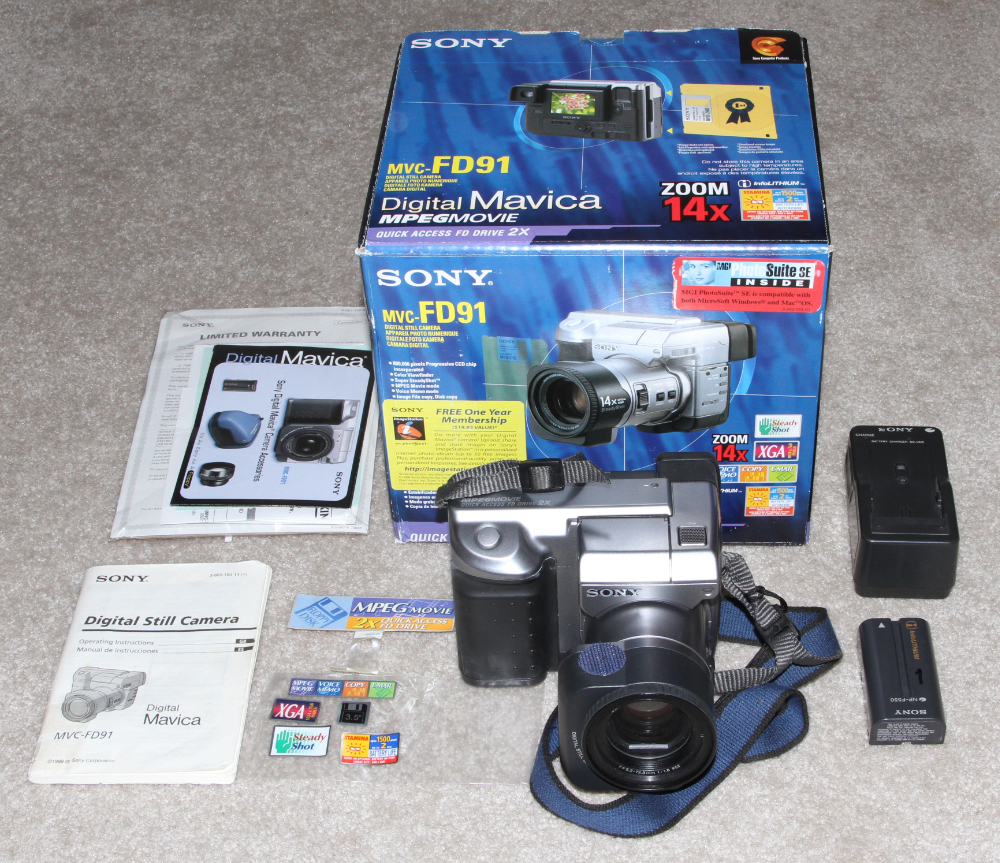
MVC-FD91 - 1998. The Sony Mavica
MVC-FD91
(FD = floppy disk) came with a variety of features unmatched by other
digicams
at the time such as its 14X zoom and image stabilization. Like other Mavicas, the FD91 stored
images
on standard floppy disks and used Sony's Info Lithium batteries as a
power
source. In addition to outlasting any other battery on the
market,
they provided continuous feedback to the user as to charge time
remaining,
and like other Lithium batteries, they did not have a memory so could
be
recharged at any time. The FD91 also boasted a record-breaking
37mm - 518mm 14X zoom lens which was augmented by an image stabilization
system
(IS) that consisted of four servo motors and a movable
lens.
The IS instantly corrected for small hand tremors and camera movements
thereby capturing sharp images (for that time) even at full 14X magnification.
This
system allowed owners to take photos at the maximum 518mm range of the
lens without resorting to the use of a tripod. Alternatively,
this
same lens system was capable of correctly focused macro photographs
even
with the subject pressed directly against the front of the lens barrel
(click on image of $5 bill above). Like the Ruvi, the FD91 could
record MPEG images with sound or record audio memos with each still
image.
1/3-inch 1024 x 768 pixel CCD. ISO 100. F/1.8 37mm - 518mm
zoom lens. Shutter 1/60 to 1/4000 second. Street price
about
$700.
https://www.dpreview.com/articles/7734530884/throwback-thursday-the-sony-mavica-fd-91
SONY
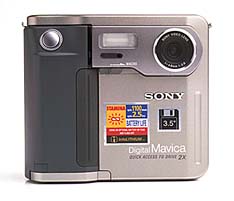
MVC-FD51 - 1998. 1/4-inch 640 x 480
pixel CCD. ISO 100. F/2 47mm autofocus lens. Shutter
1/60 to 1/2000 second. Floppy disk camera.
https://en.wikipedia.org/wiki/Sony_Mavica
SONY
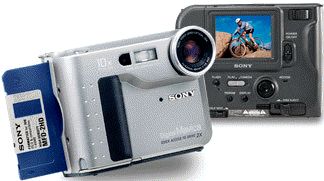
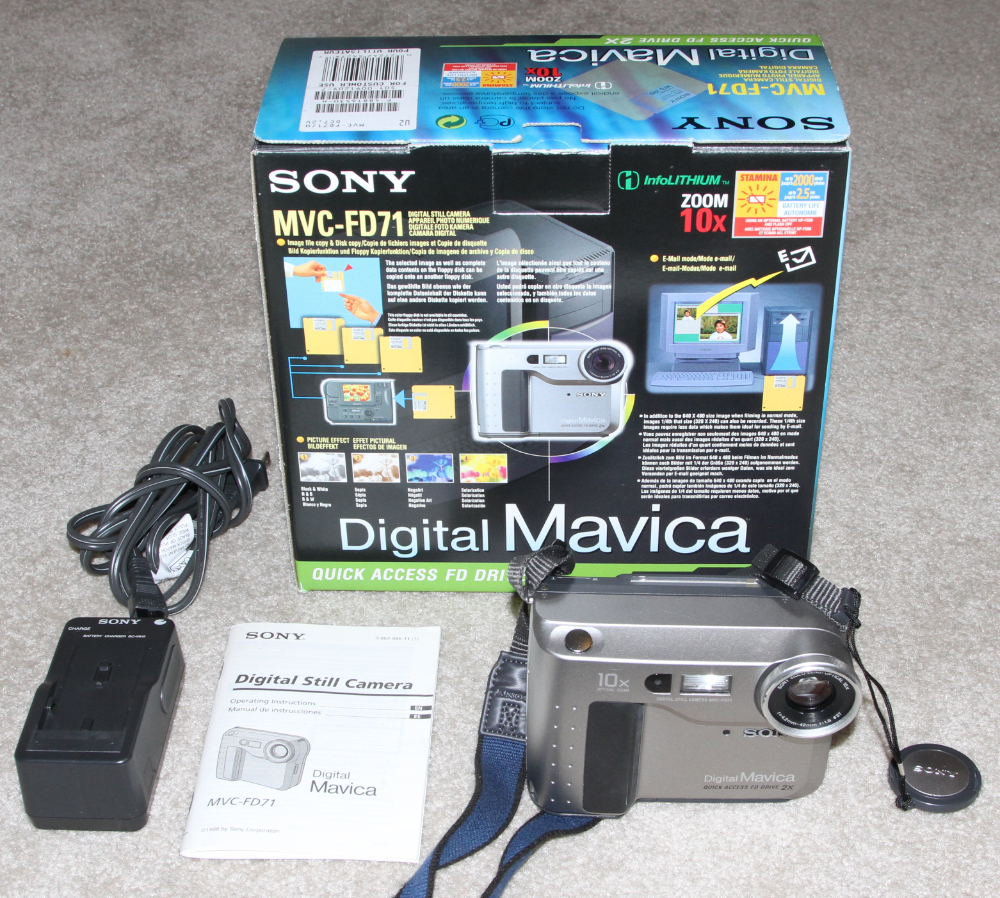
MVC-FD71 - 1998. 1/4-inch 640 x 480
pixel CCD. ISO 100. F/1.8 40mm - 400mm autofocus zoom
lens. Shutter 1/60 to 1/4000 second. Floppy disk
camera.
Street price about $420.
https://www.digitalkameramuseum.de/en/cameras/category/sony-2
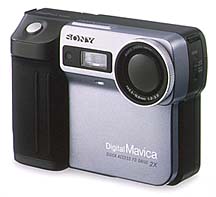
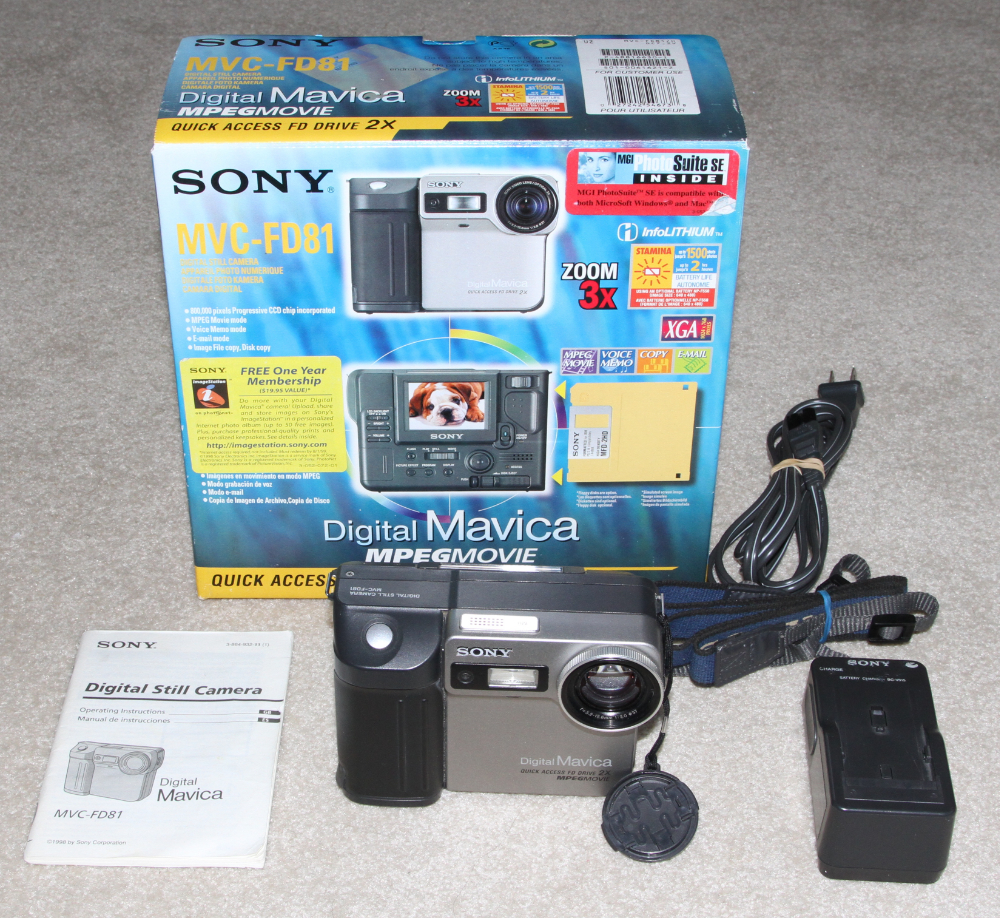
SONY MVC-FD81 - 1998. CCD 1/3-inch 1024 x 768 pixels.
ISO 100. F/2 37mm - 111mm autofocus zoom lens. Shutter 1/60
to 1/4000 second. MPEG. Floppy disk camera. Street price about
$740.
https://www.digitalkameramuseum.de/en/cameras/category/sony-2
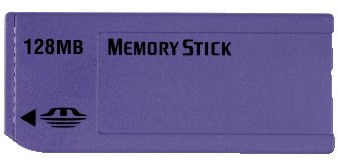
SONY MEMORYSTICK
- 1998.
In the fall of 1998 Sony released its own MemoryCard standard.
https://www.sony.net/SonyInfo/News/Press_Archive/199807/98-067/
https://www.digitalkameramuseum.de/en/memorycards
https://en.wikipedia.org/wiki/Memory_Stick
http://www.obsoletemedia.org/memory-stick/
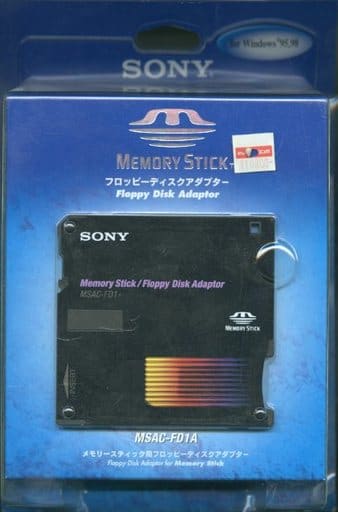
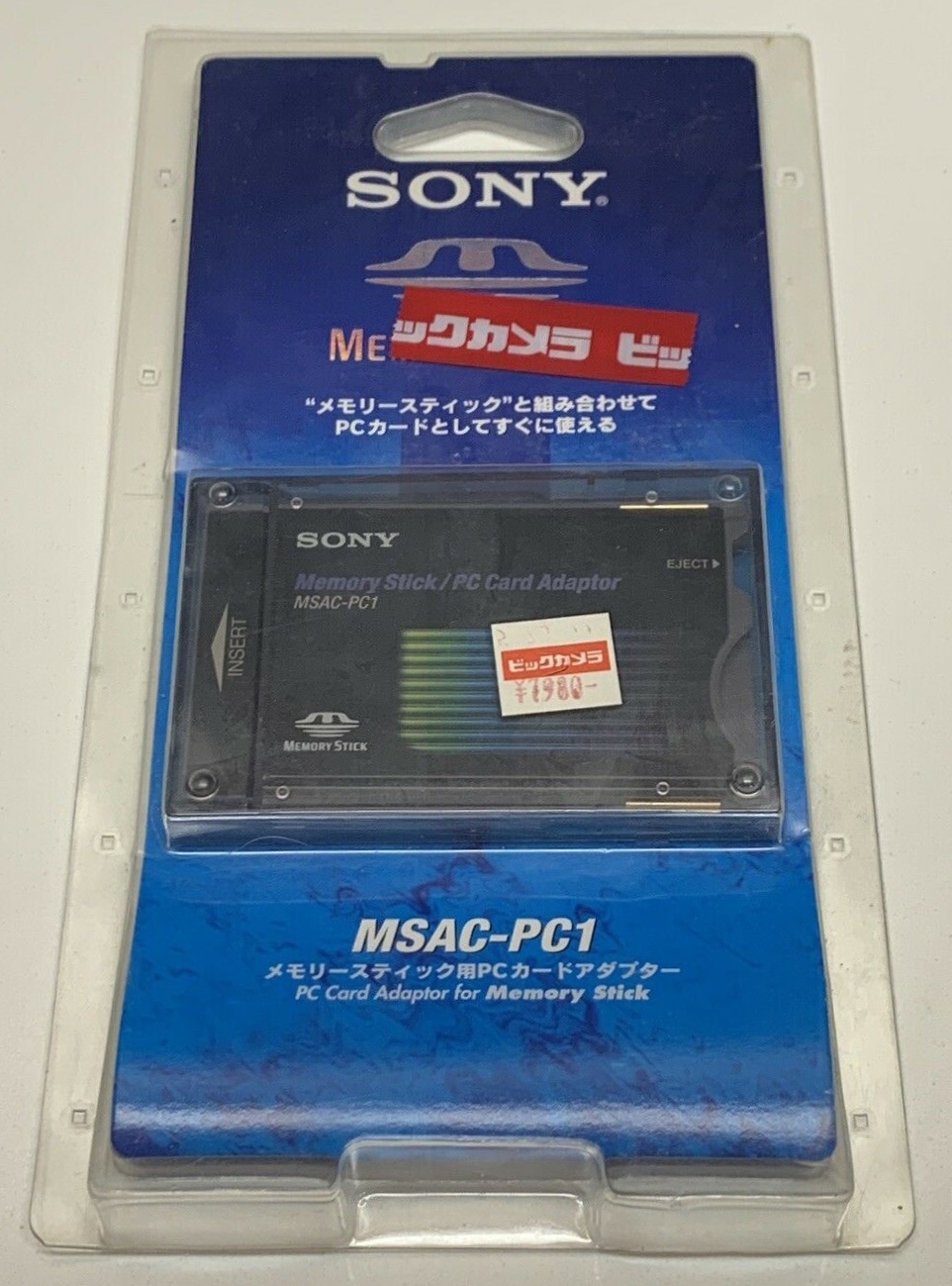
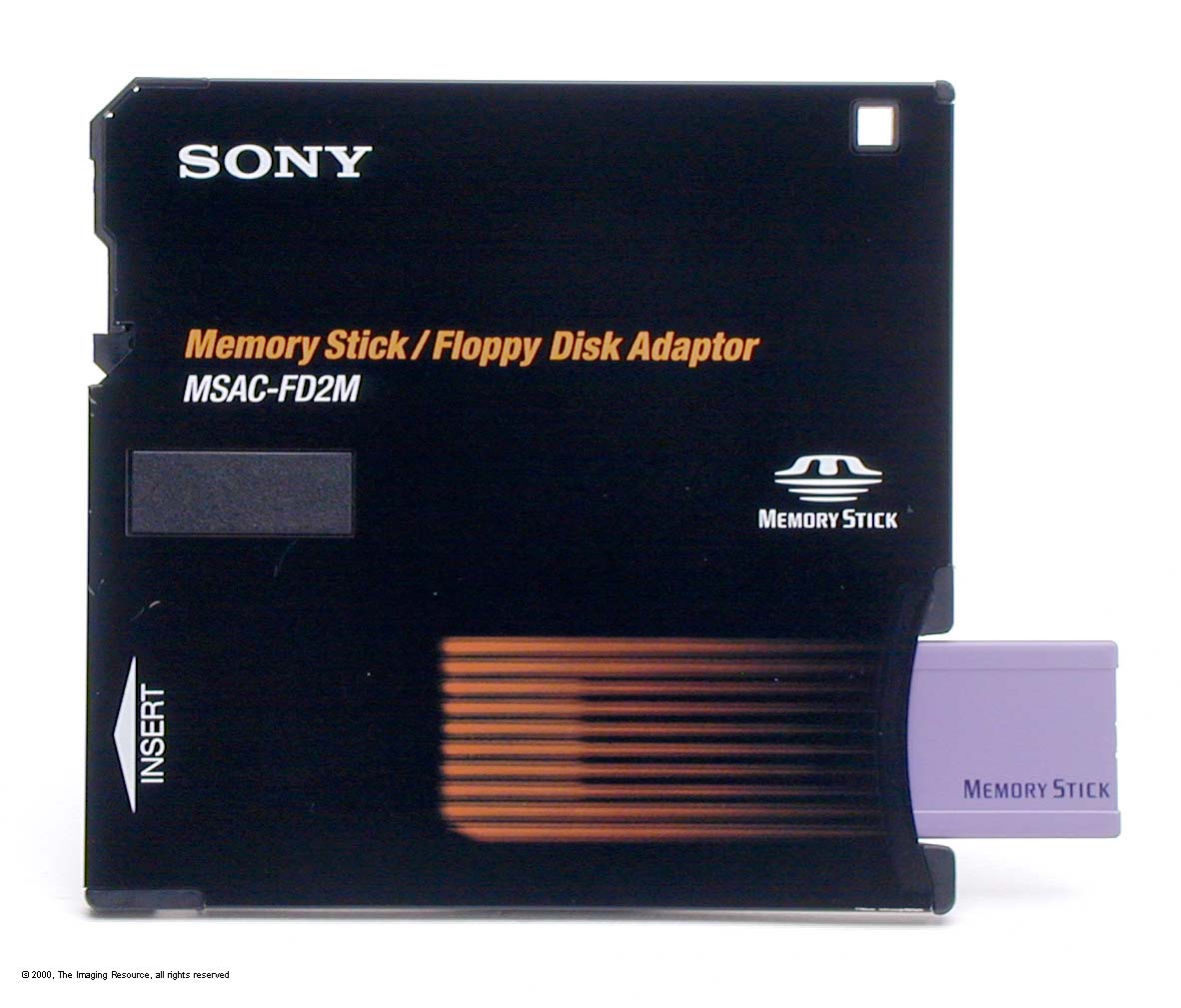
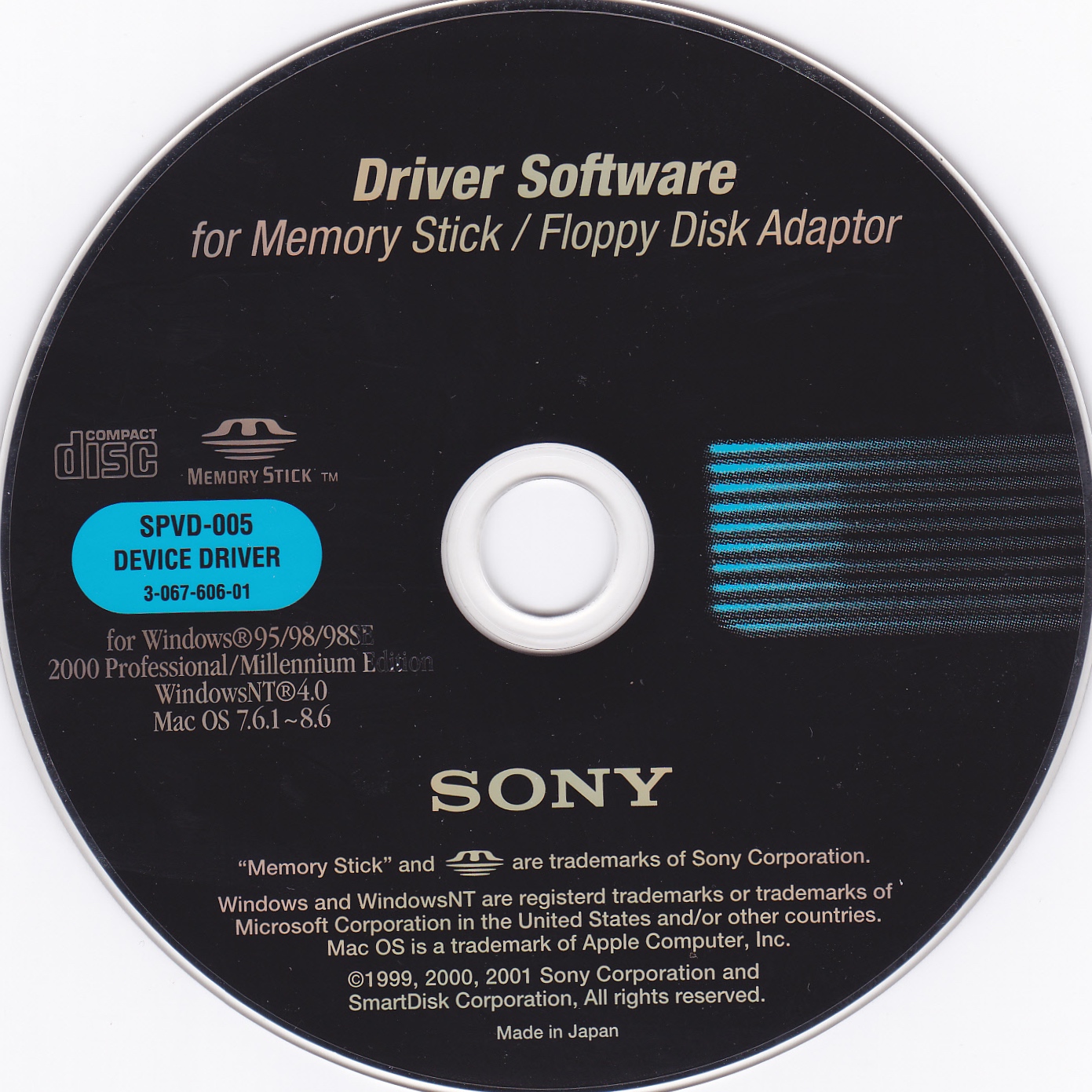
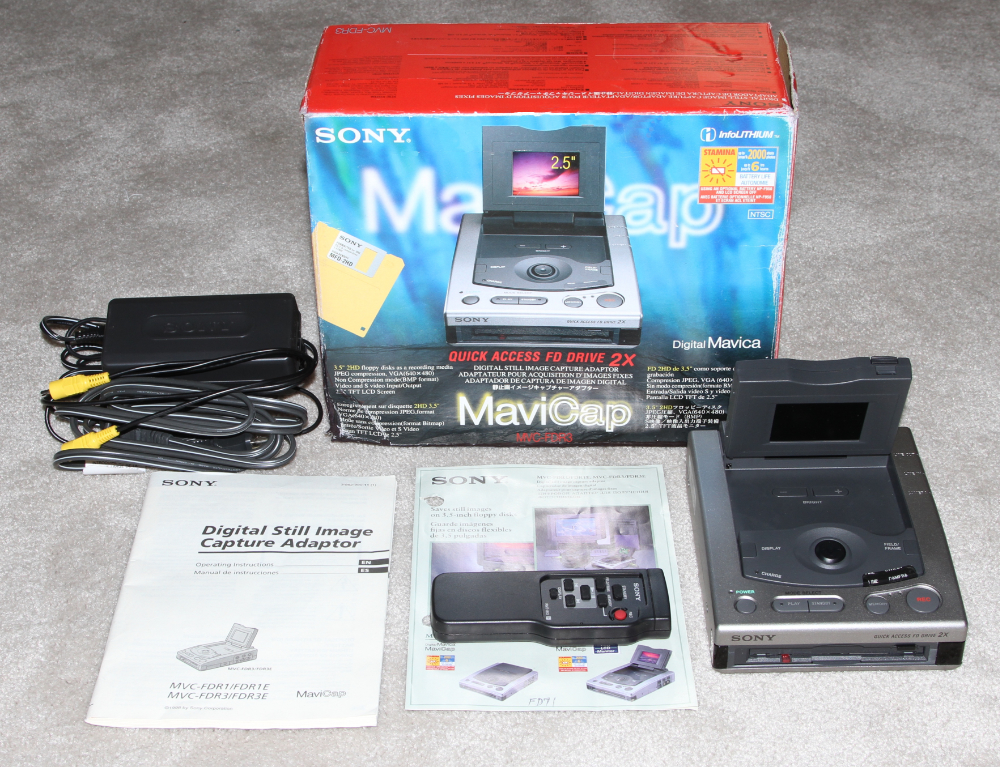
SONY FLOPPY DISK ADAPTERS - 1998+.
The early line of Sony Mavicas (1997-2000) stored images on standard
3.5-inch floppy disks. They were cheap and convenient to use, but
could only store about 10-12 photos or so on each floppy. To
increase floppy disk capacity, SmartDisk Corporation developed their
FlashPath adapters for Sony (MSAC-PC1, MSAC-FD1A, MSAC-FD2M, etc.)
whereby Sony Memory Sticks could be inserted into the adapters which
were the same size as floppies thereby allowing significantly greater
storage capacity (but no improvement in image quality) for some Mavica models. Unfortunately, this
method was expensive (the FlashPath itself cost about $100, and a
high-capacity Memory Stick another $100 or more). Also,
downloading the images was a slow process. As a result, these
adapters were not a market hit and later Mavicas and other Sony camera
models used more practical means of image storage, usually Sony Memory
Sticks themselves. MSRP about $100.
https://manualsfile.com/product/p39tot8oid.html
https://archive.org/details/msacfd1
https://www.pocket-lint.com/gadgets/news/144070-storage-formats-in-tech-heaven
SONY
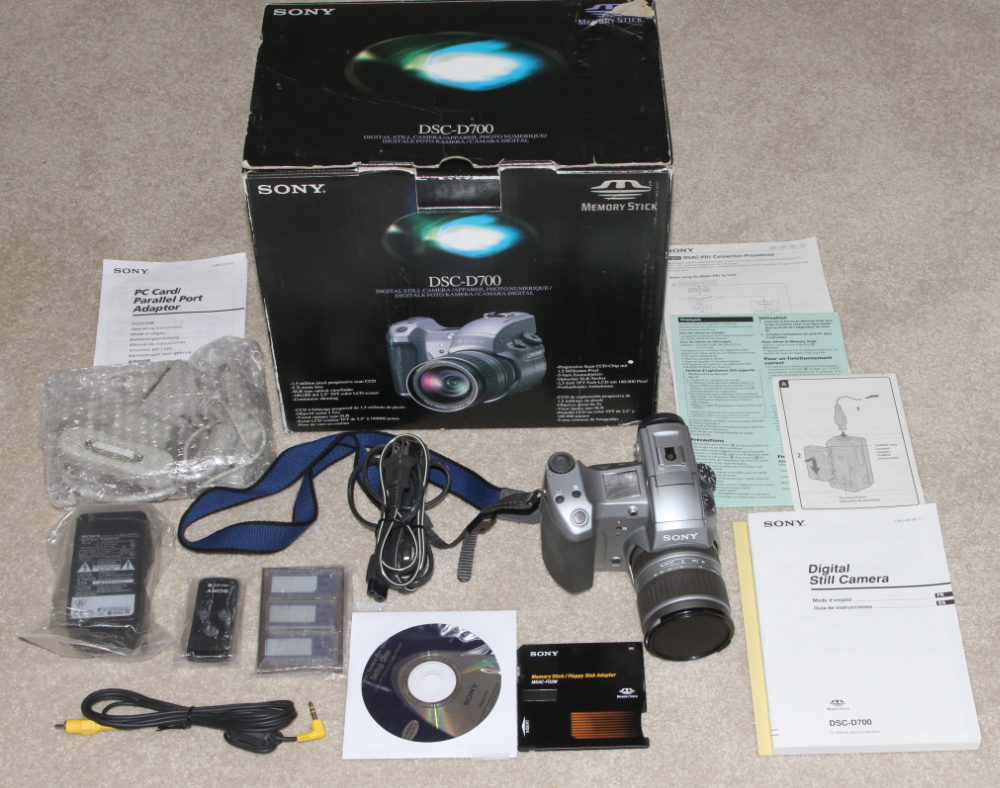
DSC D700 - 1998. CCD 1/2-inch
1344 x 1024 pixels. ISO 100/200/400. F/2 28mm - 140mm zoom lens.
Shutter 4 to 1/3000
second. MSRP $1899. Street price about $1600. Click for enlarged
view.
https://www.dpreview.com/reviews/sonydscd700
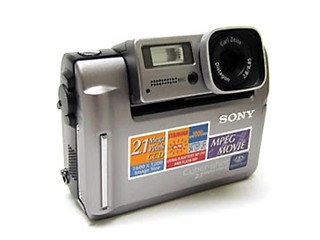
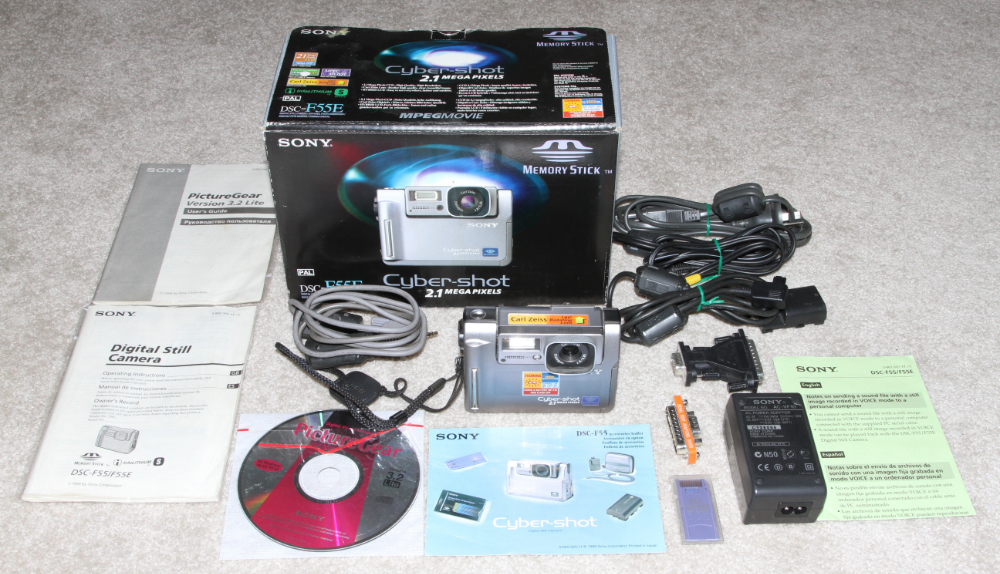
SONY DSC-F55, F55E, F55K - 1998. Shown in 1998, marketed in early 1999 (F55E in Europe, F55K in Japan). Unusually small for a 2MP camera at the time, it fit into the palm of the hand. It had a swiveling lens (Carl Zeiss).
https://www.digitalkameramuseum.de/en/cameras/category/sony-2
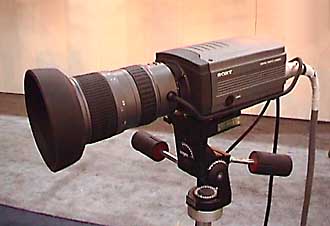
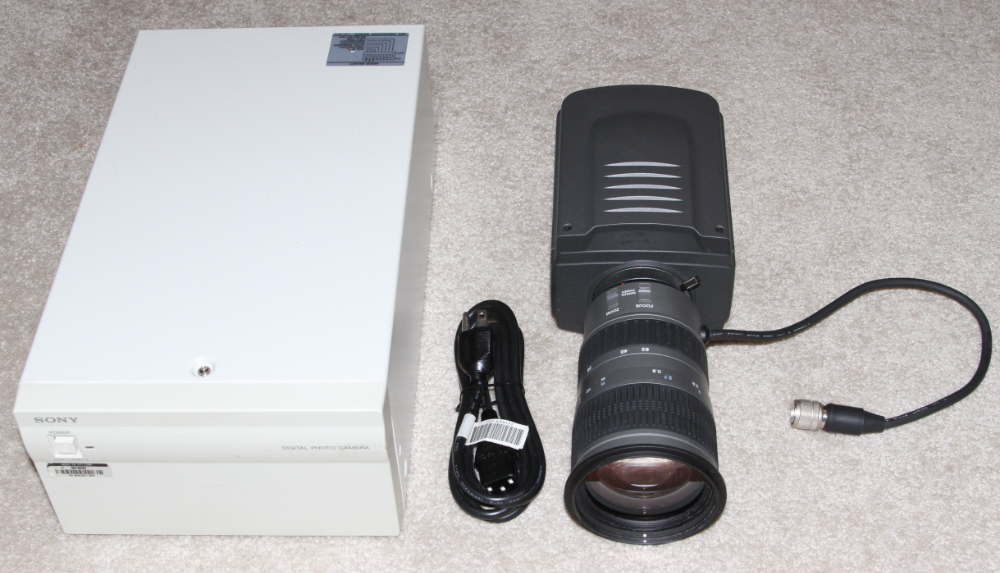
SONY DKC-ST5 - 1998. The
DKC-ST5 used three two-thirds inch 1.4 megapixel progressive scan CCD
chips (2560 x 2048 pixels) - one each for red, green and blue - mounted on a prism block
which analyzed the light. ISO 20/40/80/160. Shuttrt 1/15- 1/1000.
http://www.epi-centre.com/reports/9802seya.html
https://www.sony.co.jp/SonyInfo/News/Press_Archive/199704/97B-034/
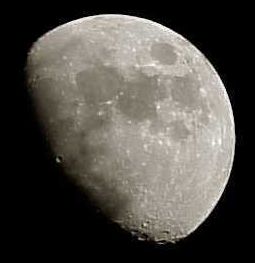
1024 x 768 pixels. While 640 x 480 pixels was pretty much the norm in 1997, by 1998 the bar had risen to 1024 x 768 pixels, with some consumer digicams having CCDs of up to 1280 x 1024 pixels. Although 1024 by 768 is now considered to be relatively low resolution, improvements in printers and digicams since 1998 allow excellent paper prints in sizes of 4 x 5 or 4 x 6 inches. Much of the criticism directed at 1024 x 768 pixel cameras of years ago could be traced to the capabilities of the cameras at that time rather then the number of pixels in the image sensors. Later prosumer digicams such as the Nikon D1 can produce images far superior to older digicams even when the 1024 x 768 size is selected. Depending on the ultimate use of the image, recording at less than the maximum capacity of the camera may be suitable and will allow storage of many more photos on whatever recording media your camera uses. Below are several samples of 1024 x 768 photos taken with the 1998 Sony Mavica FD-91. When shown at 100% on a computer monitor the images are about 3-4 times the maximum desirable print size and defects may be clearly visible (unlike printers, monitors display images with one camera pixel equaling one monitor pixel unless the monitor is set for less than 100% size), but when printed at 4 x 6 inches they are comparable to typical 35mm prints. 1024 x 768 prints from current cameras are even better.
Although the head of the Mardi Gras doll may appear to be six inches or greater in height when viewed on your monitor (click on image), the actual doll's head is only one inch high! The image shown on your monitor is highly magnified. When printed at life size with a good inkjet printer the image appears equal to that of a 35mm print. The second photo appears equally good when printed at 4 x 6 inches. The photo of the moon was taken by Michael Oates with a Sony FD91 at 14X and with a 2X teleadapter lens attached (1036mm). The image has been cropped to 253 x 263 pixels.


SOUND
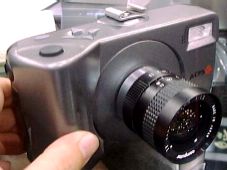
VISION ACPS-P/ACPS-SL - 1998. Shown
at '98 International Consumer Electronics Show. P model was
intended a s compact camera and the SL model to have interchangable
lenses. 1000 x 800 pixel
CMOS sensor. MSRP $1395. NOT MARKETED.
http://pc.watch.impress.co.jp/docs/article/980120/ces_p3.htm
SPHERON
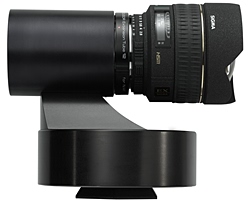
VR PanoCam DPC-10 - 1998.
Shown at
Photokina 98. Designed to take panoramic photos directly rather than by
stitching
individual still photos in a PC. Could produce panoramic
photos
up to to 2500 x 10,000 pixels. ISO 400. Shutter 1/2 to
1/8000 second. MAY NOT HAVE BEEN MARKETED.
http://www.spheron.com/
https://www.pressetext.com/news/19990402009
http://www.m2w.net/News/980921.html
SPOT TECHNOLGIES THRICE 1000 - 1998. Shown at CBit 1998. No photo available. 640 x 480 pixels. NOT MARKETED.
https://www.digitalkameramuseum.de/en/prototypes-rarities/item/spot
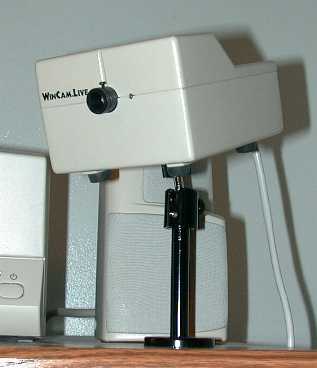
STARDOT WINCAM.LIVE - 1998.
Improved version of the Stardot WinCam.One of 1995. 640 x 480
pixel CCD. Lens: Auto exposure 8mm. Suited although not
limited to surveillance type work. Can be configured to take a photo
every 60 seconds and then be uploaded to a web server for viewing. MSRP $499.99.
https://the-gadgeteer.com/1998/08/24/wincam_live_review/
1998
S